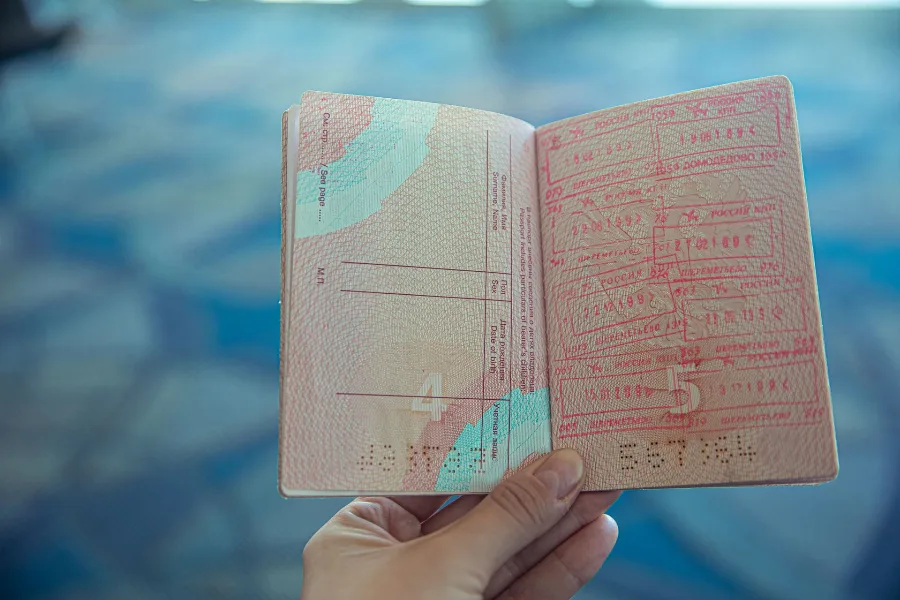
Entry Ban to Turkey: How to Check It and How to Lift It
An entry ban to Turkey (Türkiye) lasts up to five years, and up to fifteen where there is a serious threat to public order or security. It can be ended early in three ways: the Presidency of Migration Management lifts it, a special visa is granted despite the ban, or an administrative court annuls it. The rules are in Article 9 of Law No. 6458 on Foreigners and International Protection. There is no public online tool for checking whether you are banned; the reliable ways to find out are described below.
This guide explains why entry bans are imposed, how long they last, how to find out whether one has been recorded against you, and what each route for removing it realistically involves.
- Legal basis: Law No. 6458, Articles 9 and 10.
- Who imposes it: the Presidency of Migration Management or the governorates.
- Maximum length: 5 years; up to 10 more years for a serious threat to public order or public security (Art. 9(3)).
- Always after deportation: the entry of a deported foreigner is banned (Art. 9(2)).
- May be avoided: by leaving within the period of an invitation to leave, or by reporting an overstay yourself and paying the fine (Art. 9(4)–(5)).
- Ways out: lifting by the administration, entry permitted for a limited period despite the ban (Art. 9(6)), or an annulment lawsuit.
- Do not travel on a guess: entering while banned is itself a ground for deportation (Art. 54(1)(ı)).
Legal status of this guide. It reflects Law No. 6458 as currently in force, including the changes made to Article 9 by Law No. 7196 (December 2019). Last updated: October 2026.
In this guide
- What an entry ban is
- Why entry bans are imposed
- How long a ban lasts
- When a ban can be avoided
- How to check whether you have an entry ban
- What a ban blocks
- Four ways to end a ban
- The annulment lawsuit, step by step
- Prior-permission restrictions and unpaid fines
- Common mistakes
- Illustrative scenarios
- Frequently asked questions
What an entry ban is
An entry ban (Türkiye'ye giriş yasağı) is an administrative decision that a named foreigner may not enter Turkey for a set period. It is recorded in the border control system, usually together with a restriction code (tahdit kodu) that tells border officers and consulates what kind of restriction applies. When a person with an active ban presents a passport at the border, they are treated as an inadmissible passenger and sent back; a consulate asked for a visa must refuse it (Art. 7(1)(c) and Art. 15(1)(b)).
The ban is a separate decision from a deportation order, a residence permit refusal or a fine, even when it results from them. It has its own notification and its own remedy. This matters because many people successfully deal with the original problem — they pay the fine, or even win the deportation case — and discover at the airport months later that the ban is still on the system.
Why entry bans are imposed
Article 9 provides two legal bases:
- Public order, public security or public health (Art. 9(1)). The Presidency of Migration Management may ban the entry of foreigners whose entry it considers objectionable on these grounds, after obtaining the views of other institutions where necessary. Since 2019 this applies whether the person is inside or outside Turkey.
- Deportation (Art. 9(2)). The entry of foreigners who have been deported is banned by the Presidency or the governorates.
Behind these two bases, the situations seen most often in practice are:
| Situation | How the ban arises |
|---|---|
| Overstaying a visa, visa exemption or residence permit | Deportation order on exit or on detection, followed by a ban whose length depends on the length of the overstay |
| Working without a work permit | Deportation under Art. 54(1)(ğ), then ban |
| Residence permit cancelled or renewal refused, no timely departure | Deportation under Art. 54(1)(f) or (j), then ban |
| Irregular entry or exit, or false documents | Deportation under Art. 54(1)(c) or (h), then ban |
| Criminal investigation or conviction | Deportation and/or a public order ban under Art. 9(1) |
| Security assessment | Ban under Art. 9(1), often without any prior deportation and sometimes while the person is abroad |
| Unpaid administrative fines or deportation travel costs | Entry made conditional on payment or prior permission (Art. 9(7), Art. 60(3)(ç)) |
How long a ban lasts
The statute sets the ceiling: five years, which the Presidency may increase by up to ten further years where there is a serious threat to public order or public security (Art. 9(3)). Within that ceiling, the length is determined by the administration.
For overstays, the length of the ban is linked to the length of the overstay and to whether the fine was paid, on a scale set by the Ministry of Interior. That scale is not in the statute; it is fixed by ministerial instruction and has been changed several times. Figures quoted online — "three months", "one year", "five years" — may reflect an earlier version. The only authoritative figure is the one recorded in your own file.
Security-based restrictions under Article 9(1) are in practice often recorded without an end date being communicated to the person. The statutory ceiling still applies, and the absence of a stated period or of reasons is one of the arguments used when such bans are challenged in court.
When a ban can be avoided
The law gives the administration discretion not to impose a ban in two situations, both of which reward acting early:
- Self-reporting an overstay (Art. 9(4)). A foreigner whose visa or residence permit has expired, and who applies to the governorate to leave Turkey before the authorities detect the breach, may be spared an entry ban even though a deportation order is formally issued — provided the administrative fines are paid and the overstay does not exceed the limits set by the Ministry.
- Leaving within the invitation period (Art. 9(5)). A foreigner who is given 15 to 30 days to leave under Article 56 and who leaves within that period may be spared a ban.
Both provisions say "may", not "shall". But in each case the difference between acting before and after detection is usually the difference between no ban and a ban. If you are currently in Turkey with an expired status, see our guide to overstaying a visa in Türkiye.
How to check whether you have an entry ban
There is no public website where a foreigner can type in a passport number and see an entry ban. The realistic options are:
- Look at what you were given. The law requires that an entry ban be notified — at the border when you try to enter, in the case of a public order ban, or by the governorate in the case of a ban following deportation — and that the notification explain how to challenge it (Art. 10). If you signed papers when leaving Turkey or when paying a fine, read them: the ban and its period are often stated there.
- Ask through a lawyer in Turkey. A lawyer holding a power of attorney can apply in writing to the provincial directorate of migration management or to the Presidency and obtain confirmation of whether a restriction is recorded, the code, the date and the period. This is the most dependable method because the answer comes from the file itself.
- Apply for a visa at a Turkish consulate. A consulate cannot issue a visa to a person who is banned, so a refusal — especially of an otherwise routine application — is a strong indication. Consulates do not always state the reason.
- Enquire with the migration authorities. The Foreigners Communication Centre (YİMER, telephone 157) and the provincial directorates give general information. Detailed information about a restriction is normally given only to the person concerned or to their lawyer.
What does not work: e-Visa approval is not proof that there is no ban, since the e-Visa system and the border restriction records are not the same thing; and travel agents or "consultants" have no access to the records.
What a ban blocks
- Entry at the border. You are refused as an inadmissible passenger and returned on the next available transport (Art. 7).
- Visas. No visa is issued to a person whose entry is banned, unless the Minister approves an exception (Art. 15(1)(b) and 15(2)).
- Residence permits. A valid entry ban or deportation order is a ground for refusing, cancelling or not renewing short-term, family and student residence permits (Art. 33(1)(ç), 36(1)(c), 40(1)(ç)).
- Further deportation. A person found to have entered Turkey despite a ban is subject to a new deportation order (Art. 54(1)(ı)).
A ban does not by itself cancel property ownership, company shares or bank accounts in Turkey, and it does not prevent you from giving a power of attorney at a Turkish consulate so that a lawyer can act for you.
Four ways to end a ban
1. Wait for it to expire
For a short ban arising from a modest overstay, waiting is often the cheapest and safest course. Before travelling, confirm that the record has actually been closed and that no unpaid fine remains, because a fine can produce a separate restriction.
2. Ask the administration to lift it
Article 9(6) empowers the Presidency of Migration Management to lift an entry ban. A written, reasoned application — supported by documents showing why the original ground no longer applies or why maintaining the ban is disproportionate — can be made directly or through a lawyer. There is no fixed form and no guaranteed outcome, but it costs little and, if it is refused or left unanswered, the refusal can itself be taken to court.
3. Enter despite the ban with a special visa
The same provision allows the Presidency to permit a banned foreigner to enter for a specific period, the ban remaining otherwise in place. In practice this is done through a visa issued by a Turkish consulate with the administration's approval, commonly called an annotated visa (meşruhatlı vize). It is requested on a concrete basis — typically marriage to a Turkish citizen and family reunification, a work permit granted to an employer in Turkey, enrolment at a Turkish university, or medical treatment. It is not available for security-based bans in the ordinary course, and it is not granted merely because the applicant wishes to visit.
4. Have it annulled by a court
An entry ban is an administrative act and can be challenged by an annulment action before the administrative court. This is the appropriate route where the ban has no factual basis, was imposed without reasons, is disproportionate to a minor breach, or interferes with family life.
Not sure whether you are banned, or for how long? Send your passport details and a short account of how you last left Turkey. Message Yayla Law on WhatsApp or use the contact form; the record can be checked and the realistic options explained before you buy a ticket.
The annulment lawsuit, step by step
- Establish the decision and the date you learned of it. The general time limit for an annulment action in the administrative courts is 60 days from written notification (Law No. 2577, Art. 7). Many people are never formally notified and learn of the ban only when refused at the border or at a consulate; the date and manner of learning should be documented, because the time limit is calculated from it.
- Give a power of attorney. From abroad, this is done at a Turkish consulate or before a local notary with an apostille and a sworn translation.
- Obtain the file. The lawyer requests the restriction record and the underlying decision from the administration. An optional application to the administration to lift the ban (step 2 above) is often made at this stage; under Law No. 2577, Art. 11, such an application made within the litigation period suspends the running of the time limit until it is answered or deemed rejected.
- File the petition. The defendant is the authority that imposed the ban — the Presidency of Migration Management (in which case the Ankara administrative courts are competent) or the governorate concerned. The petition asks for annulment and for a stay of execution.
- Stay of execution. Unlike a deportation appeal, filing the case does not suspend the ban automatically. The court may grant a stay where the act is clearly unlawful and its implementation would cause harm that is difficult or impossible to repair (Law No. 2577, Art. 27).
- Judgment and appeal. The ordinary rules apply: the judgment can be appealed to the regional administrative court. The overall duration is measured in months, not days.
The arguments that carry weight are concrete: the overstay was miscalculated or was caused by a pending application; the person left within the invitation period; the deportation order on which the ban rests has been annulled; no individual assessment or reasoning was given for a "public order" ban; the criminal file ended in non-prosecution or acquittal; the person's spouse and children are Turkish citizens or lawful residents.
Prior-permission restrictions and unpaid fines
Not every restriction is a full ban. Under Article 9(7), the admission of a foreigner may be made subject to prior permission: by the Presidency on grounds of public order, security or health, and by the governorates on account of unpaid administrative fines and other public debts. A person in this position is not refused outright but cannot simply arrive at the border; entry requires clearance first, usually through a visa application at a consulate.
Money is also relevant in two other ways. A visa is refused to those who do not agree to pay debts arising from a previous visa or residence breach (Art. 15(1)(ğ)). And where the state paid the travel costs of a deportation, entry may be refused until those costs are reimbursed (Art. 60(3)(ç)). These restrictions are generally the easiest to resolve: payment, with proof, followed by a request to close the record.
Common mistakes
- Buying a ticket to "test" the ban. If the ban is active you are returned at your own cost, and the refusal adds a new entry to your record.
- Trying to enter on a new passport or by a different route. Records are linked to identity and biometric data. Entry in breach of a ban is a deportation ground and makes every later application harder.
- Assuming a paid fine means no ban. The fine and the ban are separate consequences.
- Assuming a won deportation case clears the record. The restriction entry often has to be removed by a separate request.
- Missing the litigation time limit by spending months on informal enquiries after learning of the ban.
- Relying on marriage alone. Marriage to a Turkish citizen does not cancel a ban; it is a basis for an annotated visa application or a proportionality argument, and the genuineness of the marriage will be examined.
Illustrative scenarios
These examples are hypothetical and simplified. They are not descriptions of real clients or predictions of any outcome.
Scenario 1: A modest overstay
A visitor overstays a visa exemption by several weeks, pays the fine at the airport on departure and is told she may not return for a period. She has no pressing reason to come back. The sensible course is to keep the payment receipt, wait for the period to expire, and have the record checked before booking a new trip.
Scenario 2: Married to a Turkish citizen
A man was deported after working without a permit and received a ban of several years. A year later he marries a Turkish citizen abroad and the marriage is registered in Turkey. The route with the best prospects is an application through the Turkish consulate for an annotated visa for family reunification, supported by the marriage record and evidence of a genuine relationship; if refused, the refusal can be challenged with a family-life argument.
Scenario 3: A ban with no explanation
A businesswoman who has travelled to Turkey for years is refused at the border and told only that a restriction exists. She has never been deported or fined. Her lawyer obtains the record, which shows a public order restriction imposed while she was abroad. Because no reasons were given and no individual assessment appears in the file, an annulment action with a request for a stay of execution is filed within 60 days of the refusal at the border.
Frequently asked questions
How long does an entry ban to Turkey last?
Up to five years. Where there is a serious threat to public order or public security, the Presidency of Migration Management can add up to ten more years (Law No. 6458, Art. 9(3)). The exact period in an individual case is set by the administration and is recorded in the person's file.
How can I check if I have an entry ban to Turkey?
There is no public online check. The reliable methods are to read the documents you were given on departure, to have a lawyer in Turkey request the record from the migration authorities under a power of attorney, or to apply for a visa at a Turkish consulate, which must refuse a banned applicant.
Can an entry ban to Turkey be lifted?
Yes. The Presidency of Migration Management can lift a ban or allow entry for a limited period while the ban remains (Art. 9(6)), and an administrative court can annul a ban that is unlawful. Which route is realistic depends on the reason for the ban.
Does paying the overstay fine remove the entry ban?
Not by itself. Paying the fine is a condition for avoiding a ban when you report the overstay yourself before it is detected, and unpaid fines can create an additional restriction, but a ban already imposed is a separate decision that continues until it expires or is lifted.
Can I enter Turkey with a new passport if I am banned?
No. The restriction is attached to your identity, not to the passport booklet. Entering Turkey despite a ban is a ground for deportation under Article 54(1)(ı) and will usually result in a longer restriction.
Does marriage to a Turkish citizen cancel an entry ban?
No, but it matters. Marriage is a recognised basis for requesting a special annotated visa that permits entry despite the ban, and the right to family life is a relevant argument in a court challenge. The authorities will examine whether the marriage is genuine.
What is the deadline to sue against an entry ban?
The general period for an annulment action is 60 days from written notification of the decision (Law No. 2577, Art. 7). Where there was no notification, the period is counted from the date the person learned of the ban, for example on being refused entry, so that date should be documented.
Will I be banned if I leave Turkey voluntarily after an overstay?
Not necessarily. If you apply to the governorate to leave before the authorities detect the breach, pay the fines and have not exceeded the overstay limits set by the Ministry, an entry ban may be waived (Art. 9(4)). Likewise, those who leave within the period of an invitation to leave may be spared a ban (Art. 9(5)).
Can I apply for a residence permit while I have an entry ban?
A valid entry ban is a statutory ground for refusing a short-term, family or student residence permit. In practice the ban has to be lifted, or entry permitted by a special visa, before a residence permit can be obtained.
Legal basis and sources
- Law No. 6458 on Foreigners and International Protection, Articles 7, 9, 10, 15, 33, 36, 40, 54, 56 and 60 — official consolidated text at mevzuat.gov.tr.
- Law No. 2577 on Administrative Procedure, Articles 7, 11 and 27.
- Presidency of Migration Management — en.goc.gov.tr.
This article provides general legal information on Turkish law as of October 2026. It is not legal advice. The length of an individual ban and the practice on annotated visas depend on administrative instructions that change; have your own record checked before making travel plans.