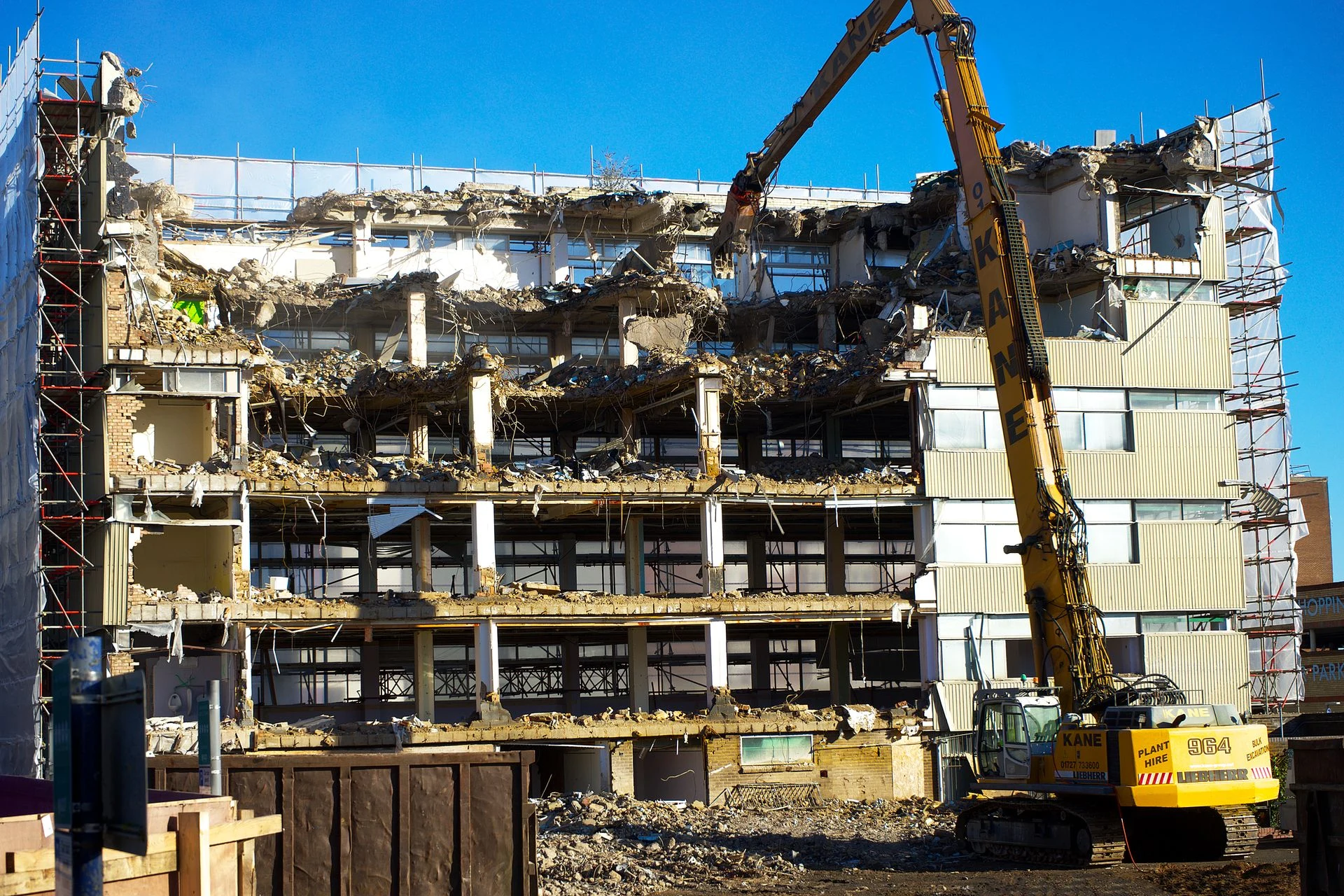
Urban Transformation in Turkey: Risky Buildings, the Majority Rule and Owners' Rights
Under Turkey's Urban Transformation Law No. 6306, a building found by a licensed institution to be at risk of collapse or heavy damage in an earthquake is declared a "risky building", annotated in the land register, and must be vacated and demolished within a period of not more than ninety days given to the owners. What is built in its place — or whether the plot is sold — is decided by the owners holding an absolute majority of the shares (salt çoğunluk), no longer two thirds. The shares of owners who do not join that decision are sold by auction to the agreeing owners at not less than their assessed market value (Art. 6). An owner can object to the risk determination within fifteen days and can challenge administrative acts in the administrative court within thirty days.
For a foreign owner of a flat in an older building in Istanbul, Izmir or Antalya, the first sign is often a letter, or a notice in the land registry record, received while abroad. This guide explains the process step by step, the owner's rights at each stage, what tenants and mortgage holders can expect, and how to avoid losing a share by silence.
- Risky building: one that has completed its economic life or is shown by scientific and technical data to be at risk of collapse or heavy damage (Law No. 6306, Art. 2).
- Who can apply: any owner, at his or her own cost, to a licensed institution; the authority can also act of its own motion (Art. 3).
- Objection: within fifteen days, decided by a technical committee.
- Demolition: within a period of up to ninety days; otherwise carried out by the administration.
- Decision on the new project: owners representing an absolute majority of shares.
- Dissenting owners: shares sold by auction to the other owners at not less than market value.
- Support: rent assistance, moving aid and subsidised credit may be available to owners, and to tenants who have lived there at least a year.
- Exemptions: transactions under the Law are exempt from notary and land registry fees, municipal charges and stamp duty.
Legal status of this guide. It reflects Law No. 6306 as amended, in particular by Law No. 7471 of November 2023, which created the Urban Transformation Presidency (Kentsel Dönüşüm Başkanlığı), reduced the decision majority and shortened several periods. The implementing regulation sets procedural detail; amounts of rent assistance are fixed administratively and change. Last updated: October 2026.
In this guide
- Three kinds of area
- The risky-building determination
- Objecting and suing
- Evacuation and demolition
- The majority decision
- Owners who do not agree
- The contract with the developer
- Rent assistance and credit
- Tenants and mortgages
- Owners abroad
- Frequently asked questions
Three kinds of area
| Concept | Meaning | Who decides |
|---|---|---|
| Risky building (riskli yapı) | An individual building, inside or outside a risky area, that has completed its economic life or is technically shown to be at risk of collapse or heavy damage | Licensed institutions, on an owner's application or on the authority's initiative |
| Risky area (riskli alan) | An area carrying a risk of loss of life and property because of ground conditions or the buildings on it | The President, by decision published in the Official Gazette |
| Reserve building area (rezerv yapı alanı) | An area designated for use in applications under the Law | The Ministry |
This guide concerns mainly the first: building-by-building transformation initiated by owners, which is how most apartment blocks are renewed. In risky and reserve areas the administration leads the project, and owners' options are narrower; a risky-area decision can be challenged from its publication in the Official Gazette, but not later on the occasion of implementation acts (Art. 6).
The risky-building determination
- Application. Any single owner, or the owner's legal representative, can apply to an institution licensed by the Presidency with the title deed and identification. The consent of the other owners is not required. The cost is borne by the applicant.
- Testing. Engineers take core samples from columns, examine reinforcement and the ground, and analyse the structure against the applicable standards.
- Report. The result is notified to the Presidency or the local authority.
- Obstruction. If testing is obstructed, the authority can have closed doors opened with police assistance on the written permission of the local governor.
- Annotation. A risky building is notified to the land registry within ten working days of the determination, to be shown in the declarations section of the register (Art. 3(2)).
- Notification. The determination is announced at the neighbourhood headman's office (muhtarlık) for fifteen days and on the Presidency's website; it is deemed notified to holders of rights on the last day of that announcement. An owner abroad may therefore be treated as notified without having received anything personally.
The authority can also order owners to have the test done within a period, and do it itself if they do not.
Objecting and suing
- Technical objection. Owners or their legal representatives can object to a risky-building determination within fifteen days. The objection is examined by a technical committee of four university academics and three officials (Art. 3(1)). It should be supported by an independent engineering opinion: the question is technical, and a bare assertion that the building "looks sound" fails.
- Administrative lawsuit. Administrative acts under the Law can be challenged in the administrative court within thirty days of notification (Art. 6(9)), with a request for a stay of execution. The earlier statutory bar on stays was annulled by the Constitutional Court.
- What succeeds. Errors in sampling or calculation; a report on the wrong building or without the required tests; defective notification. The fact that an owner does not want a new building does not.
- What an objection does not do. It does not, by itself, stop the other owners from proceeding once the determination is final.
Deadlines here are short and run from notification by posting. An owner abroad should arrange for someone to watch the building, and check the land registry record periodically through e-Government.
Evacuation and demolition
- Owners are given a period of not more than ninety days to have the building demolished (Art. 5(3)).
- If it is not demolished within the period, the administration carries out or commissions the demolition, with the support of law enforcement where necessary; the cost is charged to the owners in proportion to their shares.
- Evacuation within the period set is mandatory. Electricity, water and gas are cut on the administration's request.
- On demolition, the condominium ownership or construction servitude in the register is cancelled without the owners' consent, and the plot is registered in the names of the owners in proportion to their land shares (Art. 6(1)). Mortgages, attachments and annotations continue on the shares.
Land share is what counts. After demolition, an owner's entitlement is measured by the registered land share (arsa payı), not by the size, floor or view of the old flat. In many older buildings land shares were allocated carelessly. If your share does not reflect your unit's value, a correction action under the Condominium Law should be considered before demolition.
The majority decision
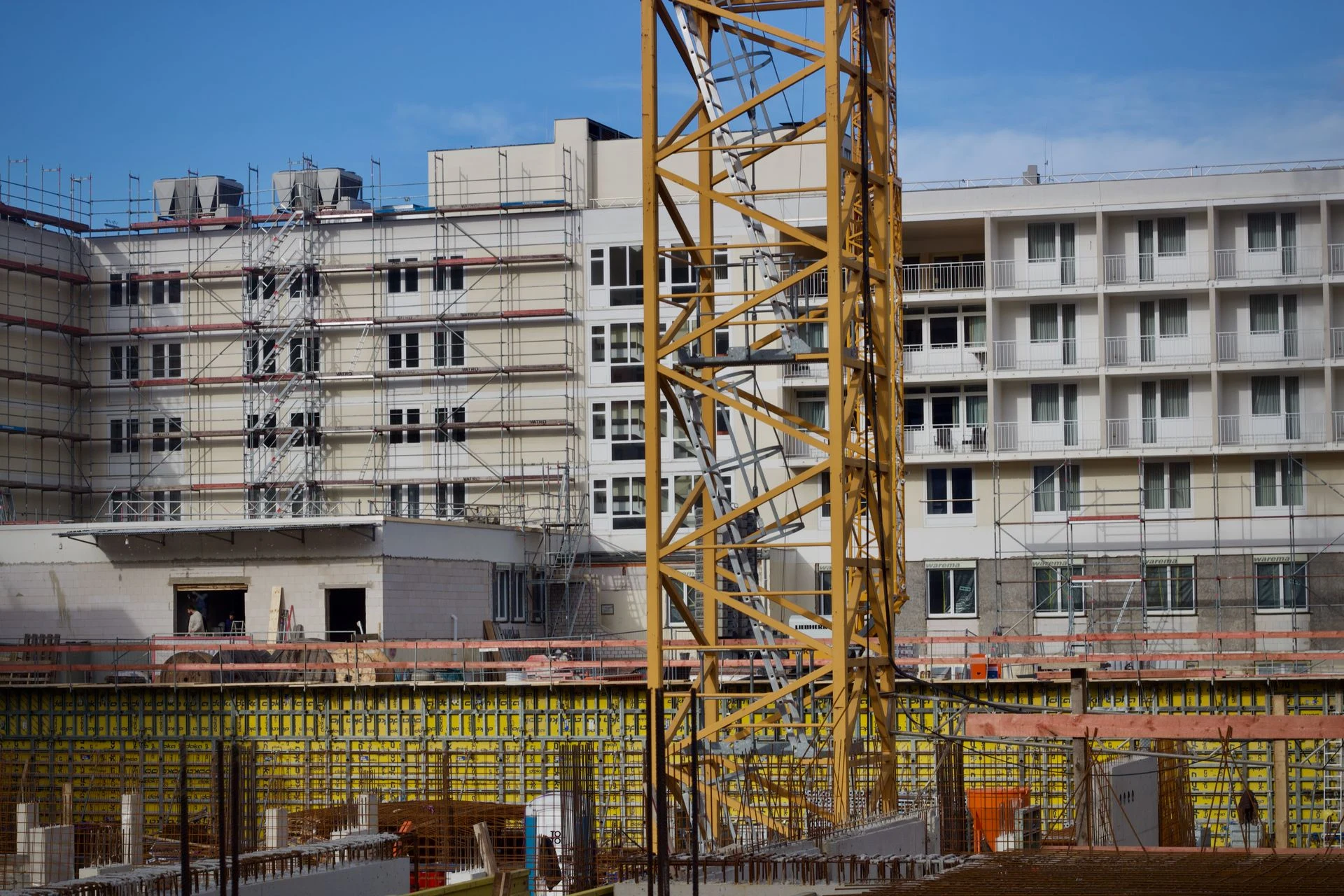
Before the buildings are demolished, the owners decide on merging or dividing parcels, on having a new building constructed, on selling the shares, or on redevelopment by construction-for-flats, revenue-sharing or other methods. The decision is taken by owners holding an absolute majority of the shares — more than half, counted by share, not by head (Art. 6(1)).
- Before November 2023 the threshold was two thirds. Advice or documents referring to "2/3" are out of date.
- Procedure. A meeting is called with written notice; the decision is recorded in minutes signed by the agreeing owners. The Law also allows the majority to be evidenced by powers of attorney or contracts signed by the agreeing owners.
- Scope. All acts that would otherwise need unanimity — licences, parcel operations, applications to other authorities — are carried out on the majority decision.
- Offer to the minority. The decision and the agreed terms are notified to the owners who did not join, with a period to accept the same terms.
- Partition actions. After demolition any co-owner can sue for partition of the plot under the Civil Code, but a pending partition action does not prevent the majority from deciding and acting (Art. 6(16)). See our guide to partition lawsuits.
Owners who do not agree
- The land shares of those who do not join the majority decision are valued — the Presidency has the market value determined — and sold by open auction to the agreeing owners, at not less than that value.
- If no agreeing owner buys, the share is purchased at the assessed value by the Presidency, the administration or the housing administration (TOKİ) in the cases provided.
- The dissenting owner receives the price and leaves the project. He or she does not receive a flat.
- Challenges. The valuation and the sale are administrative acts open to action within thirty days. The grounds that matter are an undervaluation, a majority not validly formed, or terms offered to the minority that were not the same as those accepted by the majority.
Silence is treated as dissent. An owner who simply does not respond — because the notice went to an old address — can find the share sold. If you agree with the project, sign; if you do not, object in time and on technical or financial grounds.
The contract with the developer
Most projects are carried out by a contractor who builds at his or her own cost in return for a proportion of the new units (kat karşılığı inşaat). The contract is where owners' money is won or lost.
- Form: notarial deed, annotated in the land register.
- Allocation: which units each owner receives, by the approved project, with areas and floors. "To be decided later" is a dispute waiting to happen.
- Technical specification: materials, brands, common areas — attached to the contract.
- Timetable: licence date, completion date, delivery with occupancy certificate; a daily or monthly penalty for delay.
- Rent during construction: whether the contractor pays owners' rent in addition to State assistance.
- Staged transfer of the contractor's units: title to the contractor's share passes in stages as construction milestones are met, not at the start.
- Guarantees: bank guarantee or retained units until the occupancy certificate.
- Termination: under the Law, where for reasons attributable to the contractor construction has not started within one year, or has stopped and has not been pursued with adequate crew and equipment for at least six months, the owners can decide by absolute majority of shares to terminate. The Presidency verifies the situation and gives the contractor thirty days; if work does not resume, the contracts are terminated at the end of that period (Art. 6(14)).
- Contractor's standing: licence class, completed projects, finances, tax and social security debts.
Buyers of the contractor's future units should read our guide to promise-to-sell contracts, and owners concerned about build quality our guide to defect claims.
Rent assistance and credit
- Owners of buildings vacated by agreement, their tenants, and holders of limited real rights who live in the building can be given temporary housing, rent assistance and assistance for construction (Art. 5(1)).
- Rent assistance is paid monthly for a limited period at an amount set annually by region; a subsidised loan with interest support is an alternative. Generally one or the other is chosen.
- Tenants and limited-right holders can receive moving assistance; those who have lived or had a workplace in the building for at least one year benefit from the Law's exemptions and may have access to housing or credit schemes.
- Applications are made within a period after evacuation, with the title deed, proof of residence and utility records. Late applications are refused.
- A non-resident owner whose flat was empty or let will usually not qualify for an owner-occupier's rent assistance on that unit, though different rules apply to landlords.
Fee and tax exemptions
Transactions under the Law — the first sale, transfer, registration and mortgage of the new units, contracts and powers of attorney — are exempt from notary fees, land registry fees, municipal charges, inheritance and transfer tax, revolving-fund charges and stamp duty (Art. 7). Claim the exemption expressly at the notary and registry.
Tenants and mortgages
- Leases. The determination and the evacuation order end the tenant's use of the building; the tenant must leave within the period notified. The tenant's claims are the statutory assistance, the return of the deposit, and — depending on the lease — claims against the landlord, but not a right to stay.
- Landlords should notify tenants in writing at once and help them apply for assistance. See our guides to tenant rights and ending a lease.
- Mortgages and attachments remain on the owner's land share and, at the condominium stage, continue only on the units falling to that owner; they do not block the parcel and registration operations and the consent of the creditors is not required (Art. 6(1)).
- Family home. A spouse's consent rules continue to apply to the owner's own dispositions. See the family home.
Owners abroad
- Register an address. Keep a notification address in Turkey — ideally your lawyer's — on record with the building management.
- Power of attorney. Give a representative express authority for Law No. 6306 procedures: attending owners' meetings, objecting, signing the construction contract, receiving units. See powers of attorney for Turkey.
- Heirs. If the registered owner has died, the heirs must obtain a certificate of inheritance and register before they can vote or contract. See certificate of inheritance.
- Foreign-ownership rules apply to the units received as they did to the old one.
- Citizenship or residence based on the property: demolition and re-registration can affect an undertaking or the basis of a permit; raise it with the migration or citizenship authority before the transfer.
Your building in Turkey has been declared risky, or the neighbours want to rebuild? Send the notice and your title deed details. Message Yayla Law on WhatsApp or use the contact form. We check the determination, your land share and the developer's contract, and represent you at the meetings.
Frequently asked questions
What majority is needed for urban transformation in Turkey?
Owners holding an absolute majority of the shares — more than half. The former two-thirds requirement was replaced in November 2023.
Can one owner have the building declared risky?
Yes. Any owner can apply to a licensed institution without the others' consent.
How do I object to a risky-building report?
By objection within fifteen days to the technical committee, supported by engineering evidence, and by an administrative lawsuit within thirty days of notification.
What happens if I do not agree with the majority's project?
Your land share is valued and sold by auction to the agreeing owners at not less than market value, and you receive the price.
How long do we have to demolish?
The owners are given a period of not more than ninety days, after which the administration demolishes at their cost.
Will I get a flat of the same size?
That depends on your land share and the contract negotiated with the developer. The law guarantees a share in the plot, not a particular flat.
Is rent assistance available?
Assistance or subsidised credit is available to qualifying owners and tenants on application within the set period. Amounts are fixed annually.
Does my tenant have to leave?
Yes, within the evacuation period. Tenants of at least a year may qualify for support.
Do I pay title deed fees on the new flat?
Transactions under the Law are exempt from land registry and notary fees and stamp duty.
Legal basis and sources
- Law No. 6306 on the Transformation of Areas under Disaster Risk, Articles 2, 3, 5, 6 and 7 — official consolidated text at mevzuat.gov.tr.
- Law No. 7471 of 7 November 2023 amending Law No. 6306; Implementing Regulation of Law No. 6306.
- Condominium Law No. 634; Turkish Civil Code No. 4721, Articles 698–699.
This article provides general legal information on Turkish law as of October 2026. It is not legal advice. Periods under Law No. 6306 are short; act on any notice immediately.