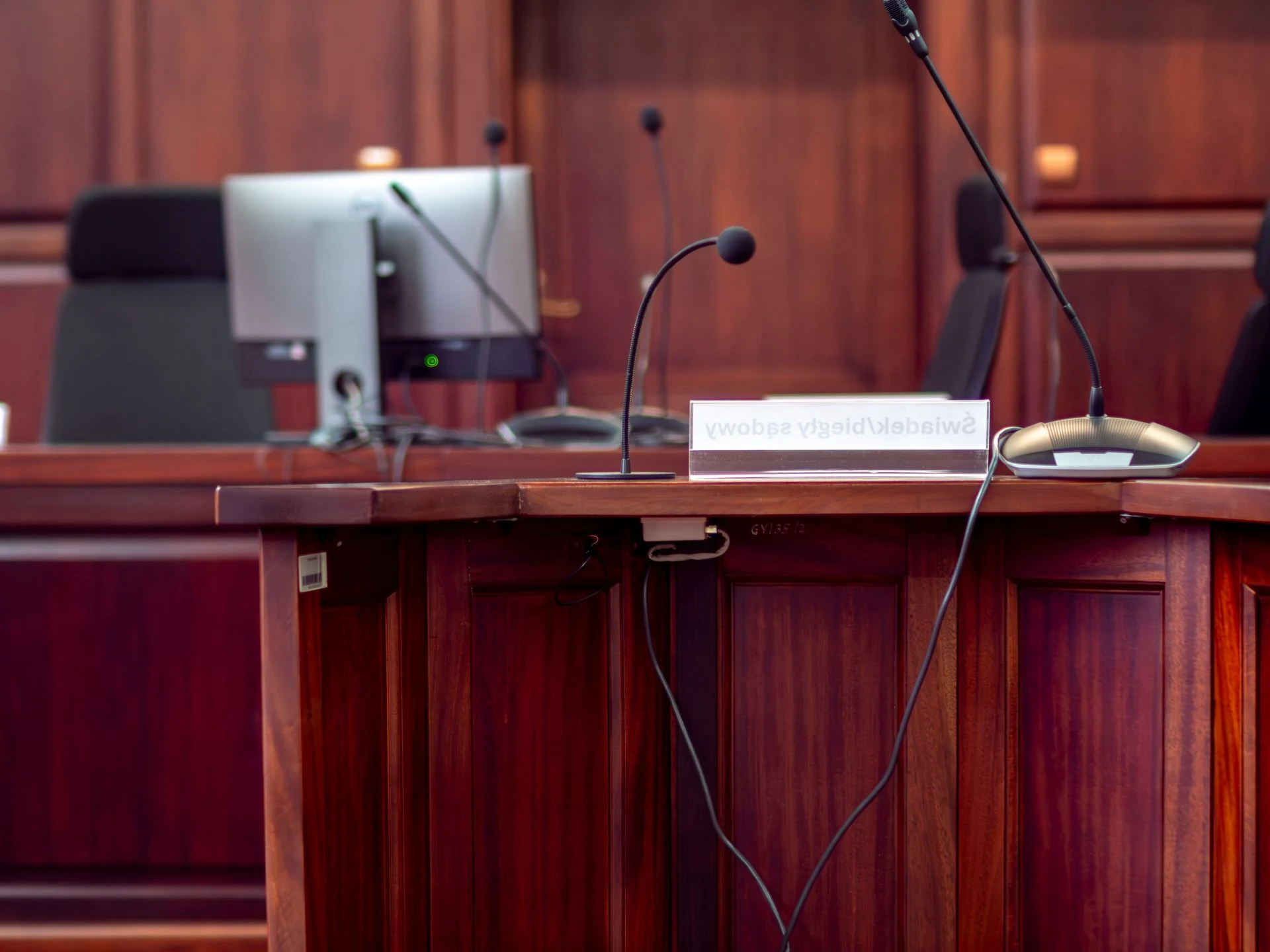
Summoned as a Witness in Turkey: Duties, Rights to Refuse and Testifying from Abroad
Anyone summoned as a witness in a Turkish criminal case — citizen or foreigner — is obliged to attend, to take the oath and to tell the truth. A witness who is properly summoned and fails to appear without giving an excuse can be brought by force and ordered to pay the costs caused (Criminal Procedure Code No. 5271, Art. 43, 44). A witness may, however, refuse to testify against a fiancé, spouse or close relative, and may decline to answer any question whose answer could expose the witness or such a relative to prosecution (Art. 45, 48). A witness who refuses to testify or to take the oath without a legal reason can be held in disciplinary detention for up to three months (Art. 60). Lying under oath is a criminal offence.
Foreigners in Turkey (Türkiye) are summoned as witnesses to traffic accidents, workplace incidents, fights, frauds and disputes involving people they know — and sometimes receive a summons after they have gone home. This guide explains what a summons means, whether you must attend, what you can refuse, how evidence is given, the protection available, and what happens if you are abroad.
- Summons: in writing, stating the consequences of non-attendance; may also be by phone or email, without those consequences (Art. 43).
- Non-attendance: compulsory attendance and liability for costs (Art. 44).
- Right to refuse: fiancé, spouse even after divorce, ascendants and descendants, relatives by blood to the third degree and by marriage to the second, adoptive relations (Art. 45).
- Professional secrecy: lawyers, doctors and other health professionals, financial advisers and notaries, for what they learned in that capacity (Art. 46).
- Self-incrimination: a witness may decline to answer questions that could expose him or her, or a close relative, to prosecution (Art. 48).
- Unlawful refusal: costs and disciplinary detention of up to three months (Art. 60).
- Expenses: compensation for lost time and travel, accommodation and meals according to a tariff (Art. 61).
- Interpreter: for a witness who does not speak sufficient Turkish (Art. 202).
Legal status of this guide. It reflects the Criminal Procedure Code as in force. Witnesses in civil cases are governed by the Civil Procedure Code, with similar duties and different rules on refusal. Last updated: October 2026.
In this guide
- Witness, suspect or victim?
- The summons
- Do you have to attend?
- When you can refuse to testify
- How evidence is given
- The oath and false testimony
- Protection of witnesses
- If you are abroad
- Expenses and time off work
- Witnesses in civil cases
- Frequently asked questions
Witness, suspect or victim?
The first question is in what capacity you are being called. The paper will say.
| Capacity | Turkish term | Position |
|---|---|---|
| Witness | Tanık | Must attend, swear and tell the truth; limited rights to refuse |
| Suspect / accused | Şüpheli / sanık | Right to silence and to a lawyer; cannot be compelled to speak |
| Victim / complainant | Mağdur / şikâyetçi | Heard on the facts, with the rights of a victim; heard under oath like a witness |
| Person with information | Bilgi sahibi | A term used by the police for someone asked what they know; not yet a formal witness |
The witness rules of the Code apply where a person is heard as a witness by a public prosecutor, a judge or a court (Art. 43(5)). The police take "statements of information"; the duties to attend and the sanctions described here do not attach to a police request in the same way, though cooperation is expected and a prosecutor can summon formally.
Be alert to your status changing. A person questioned as a witness whose answers begin to point to his or her own involvement must be treated as a suspect, told of the right to silence and to a lawyer, and what was said before that warning is open to challenge. If you think you may be at risk, say that you wish to consult a lawyer before answering. See our guide to the rights of a foreigner questioned in Turkey.
The summons
Witnesses are called by a written summons, which states the consequences of failing to attend (Art. 43(1)). It gives the court or prosecutor's office, the file number, the date and time, and the capacity in which you are called.
- Informal summons. The call may also be made by telephone, fax, email or similar means. In that case the consequences attached to a written summons do not apply (Art. 43(2)) — you cannot be brought by force on the strength of a phone call alone.
- Urgent cases. In cases involving a person in detention, a compulsory-attendance order can be issued for witnesses from the start. A court may also order that witnesses whose immediate hearing is necessary be produced at a stated time (Art. 43(1), (3)).
- Where it is sent. To the address in the file — for a foreigner, usually the address registered with the migration authority or given to the police. If you have moved, it may be treated as served.
- Language. The summons is in Turkish. Have it translated at once; the date is the important part.
If you cannot attend on the date — illness, travel, work abroad — tell the court or prosecutor's office in writing before the hearing, with proof, and ask for another date or another means of giving evidence. Courts are generally accommodating to witnesses who communicate; they are not to those who simply do not appear.
Do you have to attend?
Yes. Witnesses who are duly summoned and do not come without notifying an excuse are brought by force, and the costs caused by their absence are assessed and collected from them as a public debt. If a witness brought by force later shows reasons that justify the earlier absence, the costs order is lifted (Art. 44(1)). The compulsory-attendance order may be notified to the witness by phone or email where contact details are in the file, giving a chance to attend voluntarily.
Being brought by force means the police collect you and take you to the hearing. It is not an arrest for an offence and leaves no criminal record, but it is unpleasant and avoidable.
The duty applies to foreign nationals present in Turkey. Diplomatic agents and certain consular and international officials have immunity from the duty to give evidence under international law.
When you can refuse to testify
Family relationship (Art. 45)
The following may refuse to testify:
- the fiancé or fiancée of the suspect or accused;
- the spouse, even if the marriage has ended;
- ascendants and descendants by blood or by marriage;
- relatives by blood up to and including the third degree, and by marriage up to and including the second degree — siblings, uncles and aunts, nephews and nieces; parents-in-law, brothers- and sisters-in-law;
- those linked to the suspect or accused by adoption.
Such persons must be told, before being heard, that they may refuse, and they may refuse at any point while being heard (Art. 45(3)). Testimony taken without that warning is open to exclusion. A person who cannot understand the significance of refusing because of minority or mental condition may be heard with the consent of the legal representative.
Unmarried partners are not on the list unless engaged. A cohabiting partner cannot rely on this provision, though the privilege against incriminating oneself may apply.
Professional secrecy (Art. 46)
Lawyers, their trainees and assistants, for information learned in that capacity; doctors, dentists, pharmacists, midwives and other members of health professions, for information about patients learned in that capacity; and financial advisers and notaries, for information learned in the course of their work, may refuse to testify. Except for lawyers, they cannot refuse if the person concerned consents to disclosure.
Self-incrimination (Art. 48)
A witness may decline to answer questions whose answers could expose the witness, or one of the persons listed in Article 45, to criminal prosecution, and must be told of this in advance. This is a right to refuse particular questions, not to refuse to appear or to testify at all.
It is the provision that matters most to foreigners with an irregular status or employment. A worker without a permit asked about the workplace, a tenant in an unregistered let, a passenger asked how he entered the country — each may decline questions that would incriminate himself or herself. Take advice before the hearing if this may arise.
State secrets and official duty
Public officials need permission to testify about matters covered by official secrecy, and special rules apply to state secrets.
Stating the reason
Where the judge or prosecutor considers it necessary, a witness who refuses must state the facts on which the refusal is based and may be asked to confirm them on oath (Art. 49).
Refusing without a legal reason
A witness who refuses to testify or to take the oath without a legal ground is ordered to pay the resulting costs and may be held in disciplinary detention until judgment is given in the case, and in any event for no longer than three months, in order to secure the testimony or oath. The person is released immediately on complying (Art. 60(1)). The measure can be challenged by objection, and once fully applied cannot be repeated in the same case.

How evidence is given
- Identity. The witness is asked for name, age, occupation and address, and about any relationship with the parties. Where disclosure would endanger the witness, the address can be withheld; see below.
- Warnings. The witness is told of the importance of telling the truth, the consequences of false testimony, and any right to refuse.
- Oath. The witness swears to tell the truth before giving evidence. Certain persons are heard without oath: those under fifteen; those who cannot grasp the nature of the oath; and those who are suspected or convicted of participation in the offence under investigation, of favouring the offender or of destroying evidence (Art. 50). A relative who chooses to testify may decline the oath.
- Each witness is heard separately, out of the hearing of those not yet examined.
- Free account, then questions. The witness first tells what he or she knows without interruption; questions follow from the judge, the prosecutor, the defence lawyer and the victim's lawyer, who may question directly. The accused may put questions through the judge.
- The record. The evidence is recorded in the minutes; in court, hearings are audio- and video-recorded where the system is installed. Read or have translated what you sign.
- Interpreter. A witness who does not speak sufficient Turkish is heard through an interpreter, appointed by the court at trial and by the judge or prosecutor during the investigation (Art. 202). You are entitled to give evidence in your own language; do not agree to manage "in simple Turkish" on a matter where details count.
You may bring a lawyer. A witness's lawyer may be present during the examination to advise on rights, but does not question or make submissions.
Other ways of being heard
- By the court where you live. A witness who lives far from the trial court can be heard by the court of his or her own district on a request from the trial court.
- By video link. Where sound and image transmission is available, a witness may be heard remotely — from another courthouse in Turkey and, by arrangement, from abroad.
- At the investigation stage before a judge, where there is a risk that the witness will not be available for the trial — a tourist about to leave, for example. This preserves the evidence with the defence present.
- At home or in hospital, for those unable to attend through illness.
The oath and false testimony
A witness who gives false testimony before a court or before a person or body legally authorised to hear witnesses on oath commits the offence of perjury under the Penal Code, punishable by imprisonment; the penalty is heavier where the false evidence led to a person's conviction, and where it concerns an offence carrying a serious sentence. False evidence given in the investigation before the authority conducting it is also punished.
- What is false testimony? Stating what you know to be untrue, denying what you know, or concealing what you know about the facts you are asked about. Honest mistakes and failures of memory are not perjury. "I do not remember" is a legitimate answer when it is true.
- Retraction. A witness who tells the truth before the judgment is given, or before any restriction of the affected person's rights, benefits from a waiver or reduction of the penalty.
- Protecting yourself or a relative. The penalty may be reduced or waived where the false testimony was given by a person who would have exposed himself or herself or a close relative to prosecution by telling the truth, or who had a right to refuse and was not told of it. The correct course, though, is to use the right to decline the question — not to lie.
- Pressure on witnesses — threats, payment, inducement to give false evidence — is an offence by the person who exerts it, and is a ground for detaining a suspect. Report it to the prosecutor.
Protection of witnesses
Witnesses in cases involving serious offences who face danger to their life, bodily integrity or property because of their evidence, and their relatives, can be protected under the Code and the Witness Protection Law. Measures include:
- keeping the witness's identity and address confidential, and hearing the witness in the absence of those entitled to be present, with voice or image altered;
- hearing the witness outside the courtroom by video link;
- recording a different address for service;
- physical protection, change of identity documents, relocation, and financial support in the most serious cases.
Vulnerable witnesses — children, and victims psychologically harmed by the offence — are heard with a specialist such as a psychologist present, and as far as possible only once, with recording. Victims of sexual offences, domestic violence and trafficking have additional protections; see our guides to sexual offences, protection orders and trafficking victims.
Immigration status
Coming forward as a witness does not confer a right to stay, and it does bring a person to the authorities' notice. But the law recognises the position of those whose presence is needed: the authorities may grant a humanitarian residence permit where a foreigner's stay is required, and victims of trafficking and of serious violence have specific protection against removal. A witness with an irregular status should take advice before attending, so that the question of status is addressed together with the evidence. See our guide to the humanitarian residence permit.
If you are abroad
A Turkish court has no power to compel a person outside Turkey to attend, and cannot have a witness abroad brought by force.
- A summons sent abroad through mutual legal assistance channels is an invitation. Under the European Convention on Mutual Assistance in Criminal Matters and similar treaties, a witness who does not answer a summons served abroad is not subject to any penalty or coercive measure, unless he or she later voluntarily enters the requesting state and is summoned again there.
- Safe conduct. A witness who travels to Turkey in response to such a summons cannot be prosecuted, detained or restricted for acts or convictions that preceded departure from his or her own country, for a period after the evidence is given.
- Evidence in your own country. The usual method: the Turkish court sends a request through the Ministry of Justice, and a court or authority in your country takes your statement under its own procedure, which is then sent back. Turkey's Law on International Judicial Cooperation in Criminal Matters governs outgoing and incoming requests.
- Video link from a court or consulate in your country, where both states agree.
- Expenses of a witness who travels to Turkey are met by the requesting authority; ask for an advance.
If you are a victim who has gone home, your evidence may be decisive; without it the case may fail. Giving a full statement before leaving, and telling the prosecutor how you can be reached, is the best contribution you can make. If you are unsure whether you are wanted as a witness or as a suspect, have a lawyer check the file before you travel; see our guide to extradition and Interpol notices for the difference.
Received a summons from a Turkish court or prosecutor and unsure what it means? Send a photograph of the document. Message Yayla Law on WhatsApp or use the contact form. We can check the file, tell you your status and arrange for evidence to be given remotely where possible.
Expenses and time off work
A witness summoned by a prosecutor, presiding judge or judge receives compensation proportionate to the time lost, according to a tariff issued each year by the Ministry of Justice. If the witness had to travel to attend, travel expenses and the costs of accommodation and meals at the place of testimony are also met (Art. 61). These payments are exempt from taxes and charges. Ask the court clerk at the end of the hearing; the claim is made there.
An employer must release an employee summoned as a witness. Keep the summons and the court's attendance note for the employer.
Witnesses in civil cases
In civil litigation — divorce, employment, debt, tenancy — witnesses are named by the parties and summoned by the court. The duties are similar: a duly summoned witness who does not attend without excuse can be brought by force and fined, and a witness who refuses without legal ground can be subject to coercive detention. The grounds of refusal are wider than in criminal cases in some respects: personal reasons (close relatives of either party), secrecy, and risk of direct financial harm, damage to honour or criminal exposure for the witness or relatives. A witness may also be allowed to answer in writing in suitable cases. In family cases, relatives are frequently the principal witnesses and the right to refuse is rarely exercised. See our guide to litigation in Turkey for foreigners.
Frequently asked questions
Do I have to go if I am summoned as a witness in Turkey?
Yes, if you are in Turkey and were summoned in writing. A witness who does not attend without excuse can be brought by force and made to pay the costs.
Can I refuse to testify against my spouse or a relative?
Yes. A fiancé, spouse or former spouse, parents and children, relatives by blood to the third degree and by marriage to the second, and adoptive relations may refuse, and must be told so before being heard.
Can I refuse to answer a question that would incriminate me?
Yes. You may decline questions whose answers could expose you or a close relative to prosecution.
What happens if I refuse to testify without a legal reason?
You can be ordered to pay costs and held in disciplinary detention for up to three months, until you testify.
Will I have an interpreter?
Yes, if you do not speak sufficient Turkish. Do not sign a record that has not been translated to you.
I have left Turkey. Do I have to come back to testify?
No. A Turkish court cannot compel a witness abroad. Your evidence can be taken by a court in your country at Turkey's request, or by video link.
Can I be arrested if I come to Turkey to testify?
A witness who comes in response to a summons served abroad under the mutual assistance conventions is protected from prosecution or detention for earlier acts for a period. Check your position with a lawyer before travelling.
Are my expenses paid?
Yes: compensation for lost time and travel, accommodation and meals according to an official tariff. Claim it at the hearing.
What is the penalty for lying as a witness?
False testimony under oath is a criminal offence punishable by imprisonment, with heavier penalties where it led to a conviction. Retracting before judgment reduces or removes the penalty.
Legal basis and sources
- Criminal Procedure Code No. 5271, Articles 43–61, 180, 196 and 202 — official consolidated text at mevzuat.gov.tr.
- Turkish Penal Code No. 5237, Articles 272–274 (false testimony) and 277 — mevzuat.gov.tr.
- Witness Protection Law No. 5726; Law No. 6706 on International Judicial Cooperation in Criminal Matters.
- European Convention on Mutual Assistance in Criminal Matters (1959), Articles 8 and 12.
This article provides general legal information on Turkish law as of October 2026. It is not legal advice. If you may be at risk of prosecution yourself, consult a lawyer before giving evidence.