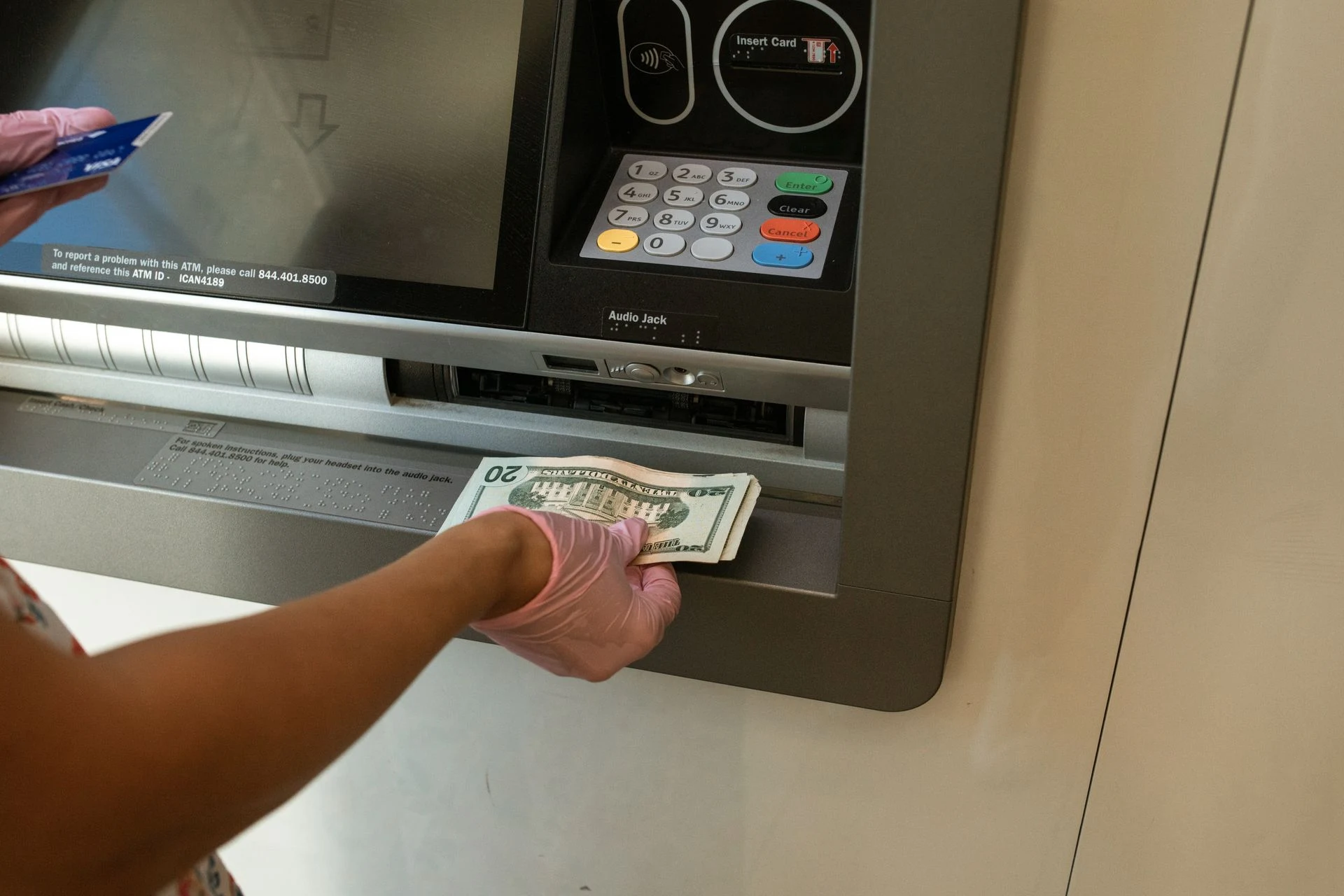
Renting Out Your Bank Account in Turkey: Money Mule Liability and the 2026 Law
Letting someone else use your bank account, card or crypto exchange account in Turkey (Türkiye) — "renting" it for a fee, or lending it to an acquaintance — makes you a participant in whatever offence the account is then used for. In most cases that offence is aggravated fraud committed through banks or information systems, punished with four to ten years' imprisonment and a fine of at least twice the benefit obtained (Turkish Penal Code No. 5237, Art. 158(1)(f)). Since July 2026 the Code addresses the account provider expressly: where participation in a fraud is limited to giving another person one's payment instruments, or the information or tools that allow an account at a bank, brokerage, payment service provider or crypto-asset service provider to be used, in order to obtain an unjust benefit, the penalty is reduced by half (Art. 158(4), added by Law No. 7589). A reduced penalty for fraud is still a penalty for fraud.
Students, newly arrived foreigners and people short of money are the ones approached: a message offering a commission for "receiving payments", a friend who "cannot open an account", an employer who asks for your card "for payroll". Months later the police call, the account is frozen, and strangers who lost their savings are suing you for the full amount. This guide explains how the schemes work, the offences and penalties, what to do if you are already involved, and how victims of the underlying fraud recover money.
- Account provider = participant in the fraud, illegal betting or laundering carried out through the account.
- New rule (July 2026): penalty halved where the participation is limited to handing over the card or account access for a benefit.
- Illegal betting: intermediating transfers of money connected with illegal betting carries three to five years' imprisonment (Law No. 7258, Art. 5).
- Laundering: three to seven years (Art. 282).
- Civil liability: victims can claim from the account holder the sums that reached the account.
- Banking consequences: accounts frozen and closed; difficulty opening new ones.
- Effective remorse: repaying the victim's loss reduces the penalty for fraud substantially (Art. 168).
- Foreigners: a fraud investigation endangers residence status and can lead to deportation.
Legal status of this guide. It reflects the Turkish Penal Code as amended by Law No. 7589 of 16 July 2026, Law No. 7258 on betting and games of chance, Law No. 5549 on prevention of laundering, and the Criminal Procedure Code. How courts will apply the new Article 158(4) — in particular what counts as participation "limited to" providing an account — will be settled by case law that does not yet exist. Last updated: October 2026.
In this guide
- How the schemes work
- Why "I only gave my account" is not a defence
- The offences
- The 2026 amendment
- Knowledge and intent
- How investigations unfold
- Civil claims and frozen accounts
- If you have already given your account
- Effective remorse and sentencing
- Consequences for foreigners and students
- If you are a victim of the fraud
- Frequently asked questions
How the schemes work
- Account rental. A recruiter offers a monthly fee or a commission per transaction for the use of your bank account, internet banking credentials, debit card and the phone number that receives the confirmation codes. Recruitment happens through social media, messaging groups, student circles and acquaintances.
- "Job" offers. You are hired as a "payment agent", "finance assistant" or "remote cashier": money arrives in your account and you forward it, minus your share, to other accounts or convert it to crypto.
- Favour for a friend. Someone you know says his own account is blocked, or he has no residence permit, and asks to have a payment sent to yours.
- Company fronts. You are asked to set up a company and open its accounts and payment terminals, which others then operate.
- Crypto accounts. You open and verify an exchange account with your identity and hand over the login.
- What flows through: money from victims of online sales fraud, fake investment platforms, "bank official" phone scams, romance fraud and sextortion; stakes and winnings of illegal betting and gambling sites; and proceeds of other crimes being layered.
- Why they need you. The organisers stay invisible. The only name the victim, the bank and the prosecutor see is the account holder's.
Why "I only gave my account" is not a defence
- Participation. Under the general rules, a person who helps in the commission of an offence — by providing the means used, or by facilitating it before or during its commission — is liable as an accessory (Art. 39), and a person who commits it jointly is a co-perpetrator (Art. 37). An account into which the victim's money is paid is an essential means of the fraud.
- Each victim is a separate offence. If forty people paid into your account, there are forty counts. Sentences are imposed for each, and the totals are served cumulatively subject to the enforcement rules.
- Benefit is not required. A fee makes intent easier to prove, but an unpaid favour that knowingly enables a fraud is still participation.
- Contract terms. Account agreements prohibit letting others use the account; the bank will close it and report.
The offences
| Offence | Provision | Penalty |
|---|---|---|
| Fraud | Penal Code, Art. 157 | One to five years' imprisonment and a judicial fine |
| Aggravated fraud — by using information systems, banks or credit institutions as an instrument; by a person presenting himself as a public or bank official; and other listed forms | Art. 158(1) | Three to ten years; for the forms listed including use of information systems or banks, not less than four years, and a fine of not less than twice the benefit obtained |
| Fraud by three or more persons together / within a criminal organisation | Art. 158(3) | Increased by half / doubled |
| Participation limited to providing a payment instrument or account access for a benefit | Art. 158(4) | The penalty reduced by half |
| Intermediating the transfer of money connected with illegal betting or games of chance | Law No. 7258, Art. 5 | Three to five years' imprisonment and a judicial fine |
| Laundering proceeds of crime | Penal Code, Art. 282(1) | Three to seven years and a judicial fine |
| Knowingly acquiring, accepting, holding or using laundered assets | Art. 282(2) | Two to five years |
| Misuse of bank or credit cards — using another's card, or a card obtained with false details | Art. 245 | Three to six years or more, depending on the form |
| Membership of, or aiding, a criminal organisation | Art. 220 | Additional, where an organisation is established |
Which of these is charged depends on what the money was. A single account commonly attracts charges of aggravated fraud for the scam payments and of the betting offence for the gambling flows.
The 2026 amendment
Article 158(4), in force since Law No. 7589 of 16 July 2026, provides that where participation in the offences in Articles 157 and 158 "is limited to the act of giving to another, in order to obtain an unjust benefit for oneself or another, payment instruments such as a bank or credit card belonging to oneself or another, or the necessary information or tools enabling the use of an account held with a bank, intermediary institution, payment service provider or crypto-asset service provider, the penalty to be imposed is reduced by half."
- What it settles. The legislature has confirmed that renting out an account is participation in the fraud — the argument that it is merely a breach of the bank contract is closed.
- What it gives. A fixed reduction by half for the person whose role stopped at handing over the card or access.
- Where it will be contested:
- "Limited to." A person who also withdrew cash, forwarded transfers, converted to crypto, recruited others or received a share of each payment has done more than hand over access.
- "For an unjust benefit." The text describes the paid account provider. How the provision relates to unpaid favours, and to the general accessory rule which already allows a reduction, is for the courts.
- Earlier acts. As a more favourable rule it can be applied to acts committed before July 2026 where, on comparison of the whole outcome, it benefits the accused.
- Arithmetic. Half of a four-year minimum for each victim is still two years per count. With many victims the totals remain severe.
Knowledge and intent
- Fraud and its participation are intentional offences. The prosecution must show that the account provider knew, or accepted as probable, that the account would be used to commit an offence.
- What courts infer intent from: payment for the use of the account; handing over the card, password and SIM together; implausible explanations; volume and pattern of transactions; continued use after the first complaint or bank warning; messages with the recruiter; similar earlier conduct; the provider's own withdrawals.
- What supports absence of intent: a real, documented reason for the single transfer — a debt repaid, a sale; a relationship of trust that was abused, with evidence; immediate reaction on learning of the misuse — blocking the account, reporting to the bank and police, returning funds; no benefit; cooperation in identifying the user.
- "I did not know what it was for" is weak where a stranger paid for access. Wilful blindness — deliberately not asking — is treated as accepting the result.
- Stolen identity. Where an account was opened with a lost or copied identity document, or credentials were phished, the holder is a victim: report at once.
- Minors and young people. Age affects criminal responsibility and procedure, not the bank's or victims' reactions.
How investigations unfold
- Victim's complaint names the receiving account. Complaints arrive from many provinces; each prosecutor's office opens a file.
- Bank records identify the holder, the device and addresses used, and where the money went next.
- Summons or apprehension. The holder is called to give a statement, often to a police cybercrime unit in another city; in organised cases, dawn operations and custody follow.
- Protective measures: blocking of accounts; seizure of balances and of devices; in organised or high-value cases, detention or judicial control with a travel ban.
- Financial intelligence. The Financial Crimes Investigation Board may suspend transactions on suspicion of laundering and analyses the chain of accounts.
- Multiple files are joined where possible; otherwise the same person stands trial in several courts, usually heavy criminal courts for aggravated fraud.
- At the statement: you may remain silent, have a lawyer and an interpreter. Do not improvise an explanation; bring the records — messages with the person who used the account, bank statements, proof of what you received and returned.
- Do not delete chats, warn the recruiter, or move remaining funds: each can be read as concealment.
See our guides to rights on arrest, searches and device seizure and pre-trial detention.
Civil claims and frozen accounts
- Victims sue the account holder. The person whose money landed in your account can claim it back from you as unjust enrichment or as damages for the tort in which you took part — whether or not you kept it. That you passed the money on is, in general, no answer where you were not in good faith.
- Joint liability. Participants in a wrongful act are jointly liable for the whole loss; the victim may choose to pursue the one who can be found.
- Enforcement. A payment order or judgment leads to attachment of wages, accounts and property. See our guide to payment orders.
- Frozen accounts. Blocks are imposed by the bank on a fraud report, by the prosecutor or judge as seizure, or by the financial intelligence unit. Release requires an application to the authority that imposed the block; where innocent funds — a salary — are caught, apply with proof.
- Banking record. Banks share fraud flags. A flagged person may be refused accounts, cards and loans for years, and payment and crypto platforms apply the same lists.
- Tax. Large unexplained turnover in a personal account attracts the tax office's attention as well.
If you have already given your account
- Stop it now. Call the bank: block the cards, internet banking and the account; change passwords; have the SIM reissued. Do the same on payment and crypto platforms.
- Preserve evidence. Screenshots of the offer and all chats, phone numbers, usernames, the accounts to which money was forwarded, what you were paid.
- Do not touch the balance. Do not withdraw or forward what is in the account.
- Take advice before reporting. Going to the prosecutor voluntarily, before you are identified, with the evidence and the organisers' details, is the strongest position available — but the statement must be prepared, because it is also an admission.
- Repay. Where victims are identified, restitution through a lawyer, documented by bank transfer and a written release, engages the effective-remorse reduction and closes the civil claim.
- Refuse further contact with the recruiter; threats made to keep you cooperating are themselves offences. Report them.
- Tell the truth to your lawyer about how many accounts, how long, and how much.
Effective remorse and sentencing
- Restitution. For fraud, where the offender, instigator or accessory personally shows remorse and makes good the victim's loss in full by return or compensation: before prosecution begins, the penalty is reduced by up to two thirds; after prosecution begins but before judgment, by up to one half. Partial restitution requires the victim's consent for the reduction to apply (Art. 168).
- Combination. The halving under Article 158(4) and the remorse reduction can both apply, in the order the Code prescribes, followed by discretionary mitigation.
- Illegal betting and laundering have their own remorse provisions for those who inform the authorities before the offence is discovered or help to uncover it.
- Deferral or suspension becomes possible only if, after reductions, the sentence for each count is two years or less and the other conditions are met. See our guides to deferred verdicts and criminal appeals.
- Mediation. Basic fraud is within victim–offender mediation; the aggravated forms are not. See criminal mediation.
- Limitation for aggravated fraud is fifteen years: files opened years later are common.
Consequences for foreigners and students
- Residence permits. A fraud investigation is entered in the systems the migration authority consults; extension can be refused and a permit cancelled on public-order grounds.
- Deportation. A deportation decision can be taken independently of the outcome of the criminal case, and must be challenged within seven days. See our guides to deportation after conviction and deportation appeals.
- Travel bans keep the person in Turkey for the duration of proceedings; conversely, leaving while files are open leads to warrants. See judicial control.
- Students risk their student permit, scholarship and place. See students and work for lawful ways to earn.
- Before leaving Turkey for good, close your accounts and cancel cards and SIMs. Dormant accounts and abandoned identity documents of departed foreigners are exactly what recruiters buy.
- Citizenship applications are refused on such records.
If you are a victim of the fraud
- Act within hours. Call your bank's fraud line to request recall and a block on the receiving account; file a complaint with the prosecutor or police cybercrime unit with the transfer receipt and all communications.
- Claim against the account holder in the civil courts or through enforcement, in parallel with the criminal case; ask the prosecutor for seizure of the balance.
- Join the criminal case as an injured party to follow restitution.
- Bank liability arises where the bank failed in its own duties — for example, executing transfers despite clear fraud alerts or weak authentication.
- From abroad, all of this can be done through a lawyer.
See our guide to filing a fraud complaint in Turkey.
Summoned over transfers through your account, or approached to "rent" it? Send the summons or the messages. Message Yayla Law on WhatsApp or use the contact form. Early, prepared cooperation and restitution change the outcome; silence and delay do not.
Frequently asked questions
Is it illegal to let someone use my bank account in Turkey?
If the account is used for an offence, you are a participant in it — typically aggravated fraud, illegal betting or laundering.
What is the penalty?
For fraud through banks or information systems, four to ten years per victim; halved under the 2026 rule where your role was limited to handing over the account for a benefit.
I did not know what the account was used for. Am I still liable?
The offence requires intent, but courts infer it from payment for access, handing over cards and codes, and transaction patterns. A documented innocent explanation is essential.
The money only passed through my account. Do I have to repay it?
Victims can claim it from you, and participants are jointly liable for the loss.
My account was blocked. How do I get it released?
Apply to the authority that imposed the block — the bank, prosecutor, judge or financial intelligence unit — with proof of the lawful origin of the funds.
Will repaying the victims help?
Yes. Full restitution reduces the penalty for fraud by up to two thirds before prosecution and up to half before judgment.
Does this apply to crypto exchange accounts?
Yes. The 2026 provision expressly covers accounts with crypto-asset service providers and payment service providers.
I am a foreign student. What happens to my residence permit?
It is at risk: permits can be cancelled and deportation ordered on public-order grounds.
Someone used my identity to open an account. What should I do?
Report to the bank and the prosecutor immediately. You are a victim, and the record of your report protects you.
Legal basis and sources
- Turkish Penal Code No. 5237, Articles 37, 39, 157, 158 (including paragraph 4 added by Law No. 7589 of 16 July 2026), 168, 220, 245 and 282 — official consolidated text at mevzuat.gov.tr.
- Law No. 7258 on the Regulation of Betting and Games of Chance in Football and Other Sports Competitions, Article 5.
- Law No. 5549 on Prevention of Laundering Proceeds of Crime, Articles 17 and 19/A — mevzuat.gov.tr.
- Turkish Code of Obligations No. 6098, Articles 49, 61 and 77–82; Criminal Procedure Code No. 5271, Articles 128 and 253.
This article provides general legal information on Turkish law as of October 2026. It is not legal advice. The 2026 provision is new and its application by the courts remains to be seen.