Driving in Turkey with a Foreign Licence: The Six-Month Rule, Exchange and Fines
A foreigner may drive in Turkey (Türkiye) on a foreign driving licence for a maximum of six months from the date of entry. After six months, the foreign licence must be exchanged for a Turkish one in order to continue driving (Highway Traffic Regulation, Art. 88). Driving without a valid licence is an administrative offence carrying a fine of 40,000 Turkish lira, and the same fine is imposed on the vehicle's operator who allowed it (Highway Traffic Law No. 2918, Art. 36). The legal alcohol limit is 0.50 promille for private cars; above it the fine is 25,000 lira and the licence is taken for six months (Art. 48).
Tourists rarely have a problem. The people who do are those who stay — residence permit holders who keep driving on the licence from home for years, often without realising that their insurance and their position after an accident depend on it. This guide covers how long a foreign licence is valid, how the exchange works, the rules that produce the heaviest penalties, and what to do when stopped or after a collision.
- Foreign licence: valid for driving for up to six months from entry (Regulation Art. 88).
- After six months: exchange for a Turkish licence at a civil registry office (nüfus müdürlüğü).
- Driving without a licence: TRY 40,000; same for the operator who permitted it (Law Art. 36).
- Alcohol limit: 0.50 promille for private cars; 0.20 for other vehicles (Art. 48).
- Refusing the test: TRY 150,000 and licence taken for five years (Art. 48).
- Above 1.00 promille: criminal offence as well (Penal Code Art. 179(3)).
- Leaving the scene of an injury accident: one to three years' imprisonment (Art. 81).
- Foreign-plated vehicles: may not leave Turkey until traffic fines are paid (Art. 115).
Legal status of this guide. It reflects the Highway Traffic Law as amended by Law No. 7574 of February 2026, which raised most fines substantially, and the Highway Traffic Regulation. Fine amounts are revised every year; the exchange procedure and the list of documents are set by the General Directorate of Civil Registration and Citizenship Affairs. Last updated: October 2026.
In this guide
- The six-month rule
- Do you need an international permit?
- Exchanging a foreign licence
- Driving without a valid licence
- Alcohol and drugs
- Speeding, phones and penalty points
- At a police stop
- Paying and contesting fines
- After an accident
- Foreign-plated and rental cars
- Frequently asked questions
The six-month rule
The Highway Traffic Law allows vehicles to be driven by holders of Turkish licences, by those holding a licence under multilateral agreements, and by holders of a valid international driving permit (Art. 36). It leaves the conditions for using foreign licences to the Regulation (Art. 39).
Article 88 of the Regulation, subject to bilateral and multilateral agreements, provides for foreigners:
- a vehicle may be driven with a licence obtained abroad for a maximum of six months from the date of entry into the country;
- at the end of six months, the foreign licence must be exchanged for a Turkish licence in order to drive.
For Turkish citizens holding foreign licences the period is two years, with a certified translation required after six months. Dual nationals should note which rule applies to them: a person who is also a Turkish citizen is treated as Turkish.
From which entry?
The text speaks of the date of entry. A tourist who visits for two weeks a year never approaches the limit. For a resident who travels in and out, relying on each re-entry to restart the period is unsafe: the rule is aimed at visitors, and a person who lives in Turkey on a residence permit and has been driving for years on a foreign licence is exposed to the argument that the period has long expired. If you have settled in Turkey, exchange the licence.
The category must match
The licence must cover the class of vehicle driven. A car licence does not cover a motorcycle above the light categories; driving a vehicle outside the class of your licence is a separate offence, and one for which the vehicle's owner is also fined (Art. 39).
Do you need an international permit?
Turkey is party to the Vienna Convention on Road Traffic of 1968. A national licence issued in the Convention's format by another contracting state is recognised; so is an international driving permit carried together with the national licence. Licences in the Latin alphabet with the standard categories are in practice accepted by police and rental companies.
An international driving permit, or a notarised Turkish translation, is advisable where the licence is not in the Latin alphabet, does not show categories in the international form, or comes from a country outside the conventions. It costs little and avoids an argument at the roadside. It does not extend the six-month period.
Exchanging a foreign licence
Since 2018 driving licences in Turkey are issued by the civil registry offices, not the police. Under Article 88, the application to exchange a foreign licence may be made at any civil registry office, and the information and documents required are determined by the General Directorate. The usual file is:
- an appointment, booked through the civil registry appointment system;
- the original foreign licence, with a Turkish translation certified by a notary or consulate;
- a residence permit or other document showing a foreigner identity number;
- a driver's health report from a family doctor or authorised health institution;
- a document showing educational level, translated where foreign;
- blood group information;
- a biometric photograph;
- proof of payment of the licence fee and card charge.
Points to expect:
- Verification. The registry may verify the foreign licence with the issuing country's authorities through diplomatic channels. A temporary document is not always given, so the process can leave a gap.
- The foreign licence may be retained and returned to the issuing state. If you need to keep it for use at home, ask before applying; this depends on the agreements with your country.
- No test for most licences. Exchange is an administrative conversion, not a new examination, where the licence is genuine and from a recognised state. Where exchange is refused — an unverifiable licence, a country not covered — the route is the ordinary one: a driving course, theory and practical examinations, and a driver's certificate (Art. 41, 42).
- Criminal record. Certain convictions, including drug offences, prevent the issue of a licence (Art. 41).
- Short stays. A person without a residence permit and foreigner identity number generally cannot exchange, and does not need to.
Turkish licences are issued for a limited period and must be renewed; driving on an expired licence is a separate offence (Art. 39). Holders must also notify changes of address within thirty days and carry the licence when driving (Art. 44).
Driving without a valid licence
| Situation | Consequence under Law No. 2918 |
|---|---|
| Driving a motor vehicle without holding a licence | TRY 40,000 fine (Art. 36) |
| Driving while the licence is temporarily withdrawn | TRY 200,000 fine (Art. 36) |
| Driving after the licence has been cancelled | TRY 200,000 fine (Art. 36) |
| Operator who allows any of the above | TRY 40,000 fine on the registration plate (Art. 36) |
| Driving with a foreign licence contrary to the period and conditions in the Regulation | Administrative fine on each occasion (Art. 39) |
| Driving a vehicle outside the licence class | Administrative fine; also for the owner (Art. 39) |
The fine is the smaller risk. The larger one appears after an accident:
- Insurance recourse. Compulsory traffic insurance pays the injured third party, but the insurer can then recover what it paid from its own policyholder where the driver did not hold the required licence. Comprehensive (kasko) cover for your own car is typically excluded altogether.
- Fault. Driving without a valid licence does not by itself make a driver at fault for a collision, but it colours the assessment and removes the benefit of the doubt.
- Rental contracts. Rental companies exclude cover for drivers without a valid licence, leaving the renter personally liable for the vehicle and for third-party claims.
- Vehicle owner. Lending a car to a friend whose foreign licence is out of time exposes the owner to a fine and to liability as operator.
Alcohol and drugs
Article 48 prohibits driving after taking narcotic or stimulant substances and driving under the influence of alcohol.
| Finding | Consequence |
|---|---|
| Above 0.50 promille (private car) — first time | TRY 25,000; licence taken for six months |
| Second time within five years | TRY 50,000; licence taken for two years |
| Third or further time | TRY 150,000; licence taken for five years each time |
| Other vehicles (taxi, bus, lorry, commercial) | Limit of 0.20 promille |
| Above 1.00 promille | In addition, criminal liability under Penal Code Art. 179(3): six months to two years' imprisonment |
| Causing an accident above the limit | Penal Code provisions apply in addition |
| Narcotic or stimulant substance detected | TRY 150,000; licence cancelled; criminal provisions apply; no new licence course for at least five years |
| Refusing to be tested | TRY 150,000; licence taken for five years |
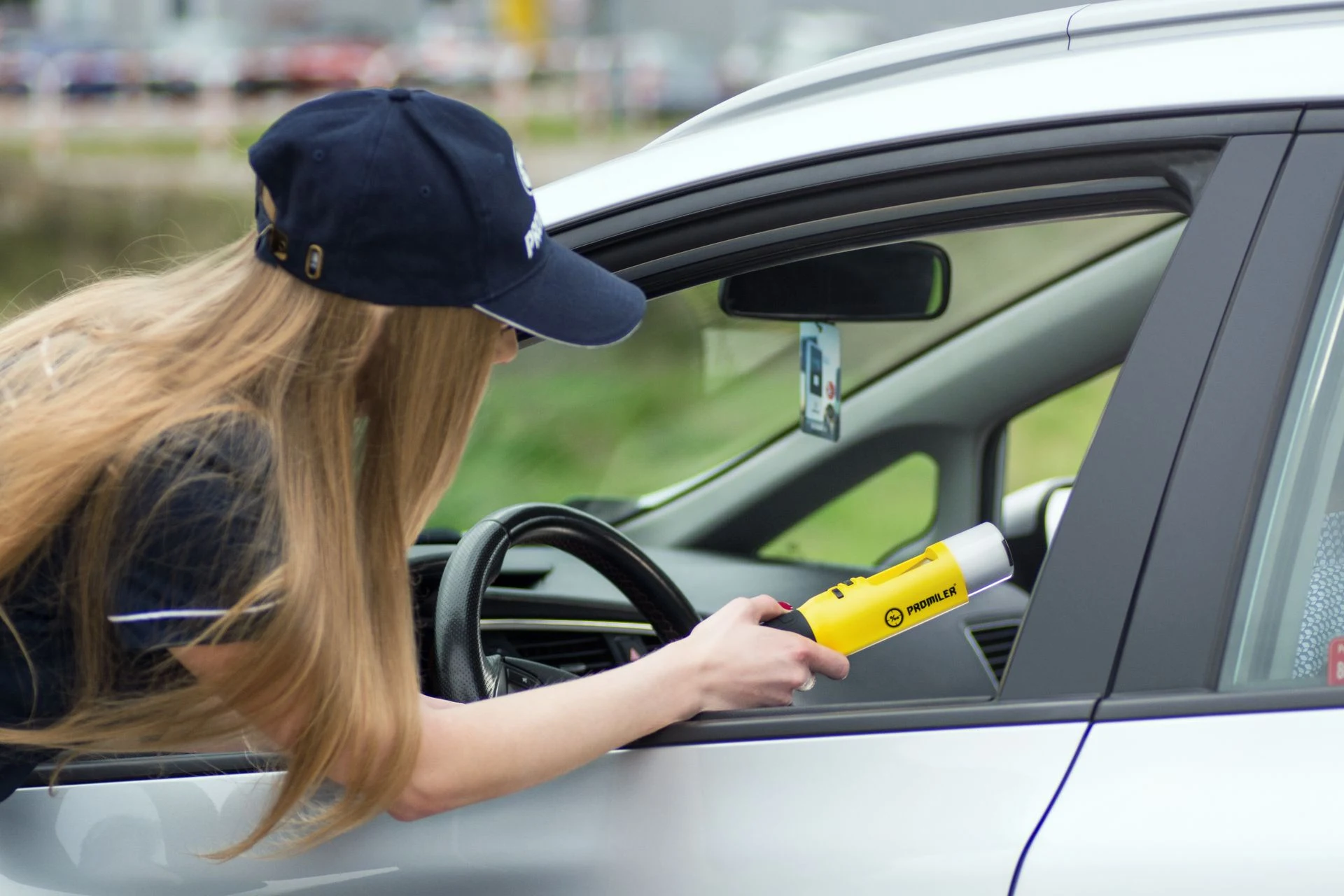
The police use breath-testing devices and test kits. A driver involved in an accident with injury or death, or a damage-only accident attended by the police, must be tested. A driver who disputes the device's reading, or will not blow, is taken to a forensic or health institution where blood, saliva or urine samples are taken.
Two points for foreign drivers. The withdrawal applies to the right to drive in Turkey whatever country issued the licence: a foreign licence is taken and held for the period. And an alcohol-related criminal conviction, unlike the administrative fine, enters the record consulted for residence permit renewals. Drug-driving leads into the criminal provisions described in our guide to drug offences in Turkey.
Speeding, phones and penalty points
Speed
Limits are set by the Regulation and by signs. The fine depends on how far the limit is exceeded and whether the road is inside or outside a built-up area, in bands from TRY 2,000 to TRY 30,000 (Art. 51). At the top three bands the licence is also taken: inside built-up areas, for 30 days at 46–55 km/h over the limit, 60 days at 56–65 km/h over, and 90 days at 66 km/h or more over. Corresponding withdrawals apply at higher excess speeds outside built-up areas. Speed is enforced by fixed cameras, average-speed corridors and mobile radar; the notice goes to the registered owner, which for a rental car means the rental company, which charges the renter.
Mobile phones
Using a mobile telephone or similar device while driving is prohibited; the fine is TRY 5,000 and increases for a repeat within a year.
Seat belts and child seats
Seat belts are compulsory in all seats, and children must use an appropriate restraint.
Penalty points
Each violation carries penalty points. A driver who reaches 100 points within one year has the licence taken for two months and must attend training; a second time in the same year, four months with a psycho-technical assessment; a third time, the licence is cancelled (Art. 118).
At a police stop
Traffic police and gendarmerie may stop any vehicle for a document check. Carry:
- your driving licence, and the international permit or translation if you use one;
- your passport or residence permit — a foreigner must be able to show identification and lawful stay;
- the vehicle registration document;
- proof of compulsory traffic insurance — for a foreign-plated car, the green card valid for Turkey or the policy bought at the border;
- for a rental car, the rental agreement.
If a fine is issued, the officer prepares a penalty notice and asks you to sign for receipt. Signing acknowledges notification, not guilt, and refusing to sign does not invalidate it. Officers who issue traffic penalty notices are not permitted to collect the fine themselves (Art. 115); payment is made through tax offices, banks, the post office or online. Do not hand cash to an officer.
Stay calm and polite whatever you think of the stop. Insulting a police officer on duty is a criminal offence with a minimum sentence of one year; see our guide to insult offences in Turkey.
Paying and contesting fines
- Deadline. A fine not paid immediately must be paid within one month of notification. After that, interest of 5% accrues for each month, up to a maximum of twice the fine, and the debt is collected as a public receivable (Art. 115).
- Early payment. A reduction is available for prompt payment under the general law on administrative offences. Paying does not prevent you from contesting the fine.
- Objection. An administrative fine can be challenged before the criminal judgeship of peace within fifteen days of notification. The objection is decided on the file. Grounds that succeed are concrete: wrong plate, no calibration record for the speed device, no sign at the location, the vehicle was elsewhere.
- Foreign-plated vehicles. Fines are collected from the driver without formal notification, and the vehicle is not allowed to leave the country until traffic fines are paid (Art. 115). Check for outstanding fines before reaching the border.
- Unpaid fines and residence. Public debts can surface at border control and in permit procedures. Pay or contest; do not ignore.
After an accident
Those involved in a traffic accident must stop at once, take safety measures, leave the scene unchanged where there is death, injury or damage, give their identity, licence, registration and insurance details to the others involved on request, and report the accident and remain until the authorities arrive or permit them to leave (Art. 81).
- Damage only. If everyone involved agrees that the police are not needed, they may record this in writing and leave. In practice this means completing the accident report form together, with photographs. Sign only what you understand; ask for a translation or call the police if you cannot read the form.
- Injury or death. Call 112. Do not leave. Leaving the scene of an injury or fatal accident without police permission, other than from necessity, is punishable by one to three years' imprisonment; in other cases outside an agreed settlement the fine is TRY 46,000 (Art. 81).
- Alcohol test. Compulsory in injury accidents.
- Criminal investigation. An injury accident opens an investigation for negligent injury. A foreign driver may be asked for a statement and, in serious cases, placed under a ban on leaving the country until the investigation progresses; see our guide to judicial control and travel bans.
Compensation, the insurer's role and the time limits are set out in our guide to traffic accident compensation in Turkey.
Involved in an injury accident, or facing a licence withdrawal or a large fine? The objection period for a traffic fine is fifteen days. Message Yayla Law on WhatsApp or use the contact form with the penalty notice or accident report.
Foreign-plated and rental cars
Bringing your own car
A vehicle registered abroad can be brought into Turkey temporarily by a person resident abroad. The entry is recorded by customs against the driver's passport, and the car must leave within the permitted period; it cannot be sold or lent freely in Turkey, and a driver who leaves the country without it must place it under customs supervision. Exceeding the period leads to customs penalties calculated on the vehicle's taxes. The rules, the permitted period and the conditions for residents differ by status and should be checked with customs before travel.
Insurance
Compulsory liability insurance is mandatory. Foreign-plated vehicles without insurance valid in Turkey must take out the compulsory policy on entry at the border (Art. 91). Check that your green card is not struck through for Turkey ("TR").
Rental cars
Rental companies set their own minimum age and licence-holding period, and require a licence valid under the rules above. Read the excess, the exclusions for alcohol and unlicensed drivers, and the list of authorised drivers. Fines captured by camera arrive after you have left and are charged to your card with an administration fee; motorway and bridge tolls are collected electronically and billed the same way.
Buying a car in Turkey
A foreigner with a residence permit and foreigner identity number can buy and register a vehicle on Turkish plates through a notary. Registration, compulsory insurance and periodic inspection then apply as for any owner.
Frequently asked questions
Can I drive in Turkey with a foreign licence?
Yes, for up to six months from the date of entry. After six months you must exchange it for a Turkish licence to continue driving.
Do I need an international driving permit in Turkey?
Not if your licence is in the Latin alphabet and in the international format. It is advisable for licences in other scripts or formats, carried together with the national licence.
How do I convert my foreign licence to a Turkish one?
Apply by appointment at any civil registry office with the original licence and its certified translation, your residence permit, a health report, education document, photograph and fee receipt.
Do I have to take a driving test to convert?
Normally no. Exchange is an administrative conversion. A test is needed only if the licence cannot be exchanged and you apply for a new Turkish licence.
What is the penalty for driving without a valid licence?
A fine of TRY 40,000 for driving without a licence, with the same fine for the vehicle's operator, and serious insurance consequences after an accident.
What is the drink-driving limit in Turkey?
0.50 promille for private cars and 0.20 for other vehicles. Above the limit the fine is TRY 25,000 with a six-month withdrawal; above 1.00 promille it is also a criminal offence.
Can I refuse a breathalyser test?
Refusal carries a fine of TRY 150,000 and withdrawal of the licence for five years, and samples may be taken at a health institution.
How do I contest a traffic fine in Turkey?
By objection to the criminal judgeship of peace within fifteen days of notification, with evidence. You can pay first and still object.
Can I leave Turkey with unpaid traffic fines?
A foreign-plated vehicle is not allowed to leave until its fines are paid. For individuals, unpaid fines accrue interest and can cause difficulties later; settle them before departure.
Legal basis and sources
- Highway Traffic Law No. 2918, Articles 36, 39, 41, 42, 44, 48, 51, 81, 91, 115 and 118 — official consolidated text at mevzuat.gov.tr.
- Highway Traffic Regulation, Article 88 — mevzuat.gov.tr.
- Turkish Penal Code No. 5237, Article 179.
- Vienna Convention on Road Traffic (1968).
This article provides general legal information on Turkish law as of October 2026. It is not legal advice. Fine amounts are revised annually and customs rules for foreign vehicles depend on the driver's status.