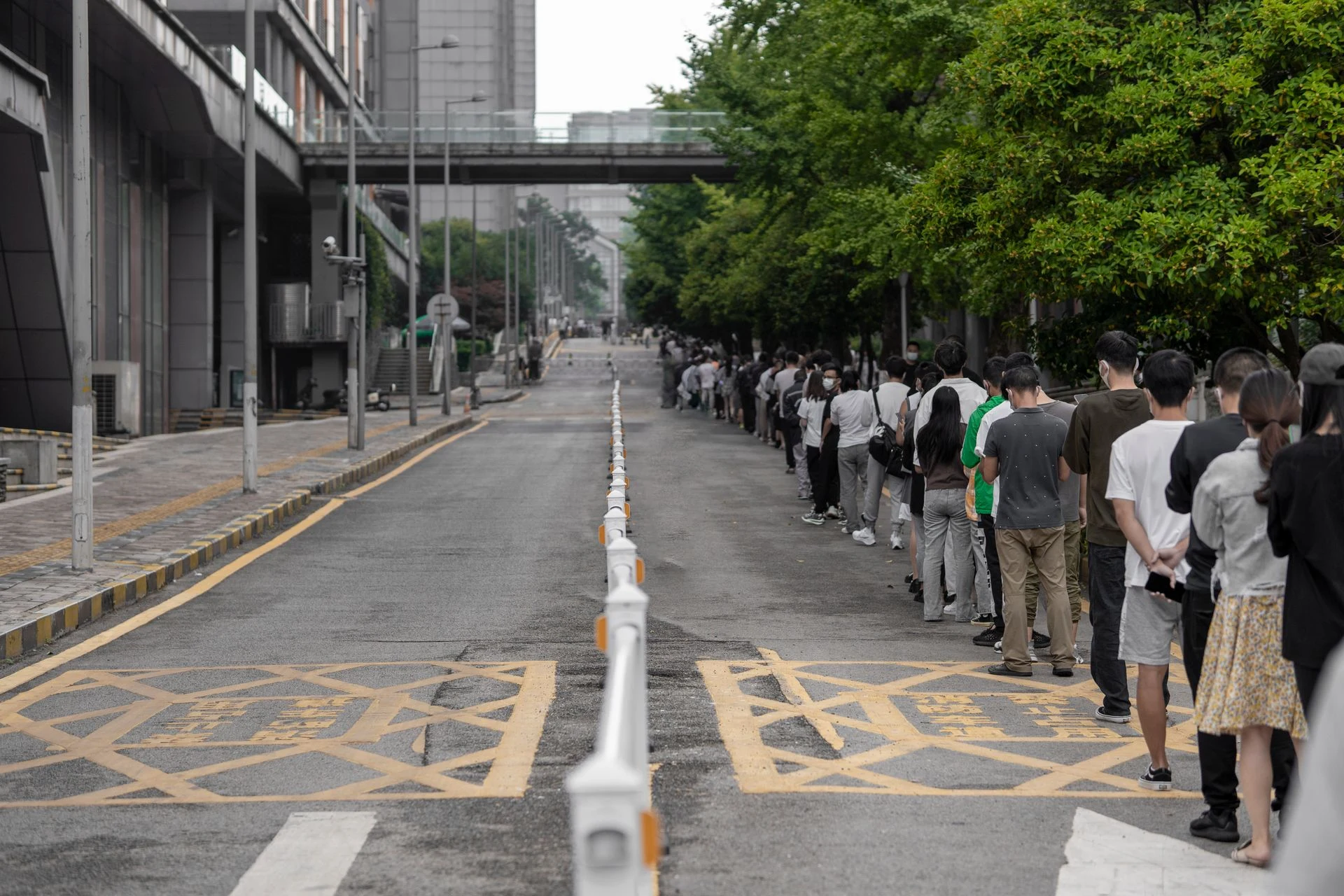
How to Apply for Asylum in Turkey: The International Protection Procedure Step by Step
To apply for asylum — "international protection" — in Turkey (Türkiye), you go in person to the governorate's provincial directorate of migration management and state that you are seeking protection; the application is registered, you are interviewed within 30 days, and a decision should be made within six months. The procedure is set out in Articles 65 to 80 of Law No. 6458. While your application is pending you receive an identity document that replaces a residence permit, you may not be returned to your country, and you must live in the province assigned to you.
This guide explains who can apply, the steps from registration to decision, your rights and obligations along the way, and the points at which applications most often fail for reasons that have nothing to do with the merits.
- Where: the governorate, in person; applications to police, gendarmerie or border officers are passed on immediately (Art. 65).
- Cost: the procedure and the applicant identity document are free.
- No penalty for irregular entry if you apply within a reasonable time and explain your entry (Art. 65(4)).
- Interview: within 30 days of registration (Art. 75); interpreter on request (Art. 70).
- Decision: within six months of registration (Art. 78).
- Work: you may apply for a work permit six months after applying (Art. 89(4)).
- Biggest risk: missing reporting dates or leaving your assigned province — the application is then treated as withdrawn (Art. 77).
Legal status of this guide. It reflects Law No. 6458 as currently in force. It concerns individual international protection applications. Syrian nationals and others covered by temporary protection are subject to a separate regulation and do not go through this procedure. Last updated: October 2026.
In this guide
- Who can apply, and for what
- Where and when to apply
- The procedure, step by step
- The interview
- Your assigned province and reporting duty
- Your rights while you wait
- Your obligations
- Inadmissible and accelerated cases
- Can applicants be detained?
- The decision and what follows
- Common mistakes
- Frequently asked questions
Who can apply, and for what
Any foreigner or stateless person may apply on their own behalf (Art. 65(3)). An applicant may also apply on behalf of family members who arrived with them and whose claims rest on the same grounds; adult family members must consent.
Turkey applies a geographical limitation to the 1951 Refugee Convention, so the law provides three statuses:
| Status | Who | Legal basis |
|---|---|---|
| Refugee | A person with a well-founded fear of persecution for reasons of race, religion, nationality, membership of a particular social group or political opinion, because of events in European countries | Art. 61 |
| Conditional refugee | The same definition, where the events occurred outside Europe; the person is allowed to stay in Turkey until resettled in a third country | Art. 62 |
| Subsidiary protection | A person who is not a refugee but who, if returned, would face the death penalty, torture or inhuman or degrading treatment, or a serious individual threat from indiscriminate violence in armed conflict | Art. 63 |
You do not choose a status; you apply for international protection and the authorities determine which, if any, applies. People who have committed certain serious crimes, or who are protected by another UN agency or enjoy the rights of nationals in another country, may be excluded (Art. 64).
Fear of general hardship, unemployment or a wish for a better life is not a ground for protection. The claim has to be about what would happen to you on return.
Where and when to apply
- In person at the governorate. Applications are made personally to the governorate, in practice at the provincial directorate of migration management (Art. 65(1)). Registration is carried out only in designated provinces, and you may be referred to one of them; ask the directorate where you first present yourself to give the referral in writing.
- To law enforcement or at the border. An application made to the police, gendarmerie or coast guard inside the country, or to officers at a border gate, must be reported to the governorate immediately (Art. 65(2)). The conditions for entry — visa, passport, even an entry ban — may not be applied so as to prevent an application (Art. 8).
- From detention. Applications by persons deprived of liberty are passed to the governorate at once (Art. 65(5)). Note that an application made from a removal centre is examined under the accelerated procedure.
- As soon as you can. Those who apply to the governorate on their own initiative within a reasonable time are not penalised for irregular entry or stay, provided they give valid reasons for it (Art. 65(4)). Delay damages both this protection and your credibility.
The United Nations refugee agency (UNHCR) no longer registers applicants or decides claims in Turkey; registration and status determination are carried out by the Presidency of Migration Management. UNHCR and its partner organisations provide counselling and can refer vulnerable cases.
The procedure, step by step
- Application and registration. The governorate records your application. You must give correct identity information and hand over any identity and travel documents you hold; you and your belongings may be searched for this purpose (Art. 69(2)). If you have no documents, identity is established by comparing personal data and by enquiry; if that yields nothing, your own statement is accepted (Art. 69(3)).
- What is recorded. Why you left your country, what happened to you afterwards, how you entered Turkey, your route and means of travel, and any earlier application or protection in another country (Art. 69(4)). Fingerprints and a photograph are taken.
- Information. At registration you must be told about the procedure, your rights and obligations, the consequences of not complying, and how and when decisions can be challenged (Art. 70(1)).
- Interview date. The time and place of your interview are notified at registration (Art. 69(5)).
- Health check where there is a public health concern (Art. 69(6)).
- Applicant identity document. Once registration is complete, you and family members who arrived with you are issued an International Protection Applicant Identity Document containing a foreigner identity number. It is free and takes the place of a residence permit (Art. 76).
- Assignment to a province and a reporting schedule (Art. 71).
- Interview within 30 days of registration (Art. 75).
- Decision within six months of registration; if this is not possible, you must be informed (Art. 78(1)).

The interview
The interview is where the case is decided. The law gives it specific safeguards (Art. 75):
- it is individual and private, and you must be given the opportunity to express yourself in the best way possible;
- family members are present only if that is considered necessary and you agree;
- at your request, your lawyer may attend as an observer;
- interpretation is provided at your request at the application, registration and interview stages (Art. 70(2));
- for persons with special needs, their situation is taken into account; a psychologist, child development specialist, social worker, parent or legal representative may be present when a child is interviewed;
- if the interview cannot be held, a new date at least ten days later is set;
- the interview may be recorded, in which case you are told; a written record is drawn up at the end and a copy must be given to you.
How to prepare:
- Tell the whole account, in order. Who threatened or harmed you, when, where, why, and what you did about it. Dates and places matter; approximate dates are better than invented ones.
- Explain why the authorities of your country could not or would not protect you, and why you could not live safely elsewhere in the country.
- Bring evidence and say what else exists: identity papers, summonses, court documents, medical reports, photographs, messages, membership cards, news items.
- Say so if you do not understand the interpreter or if the interpreter is from a group you fear. Ask for this to be noted.
- Do not exaggerate and do not leave things out because they are painful or embarrassing. Inconsistencies discovered later are the most common reason for refusal.
- Read the record before signing, or have it read back to you, and ask for corrections.
You are under a duty to cooperate and to submit all information and documents supporting the application (Art. 75(2)).
Your assigned province and reporting duty
An applicant may be required to live in a reception and accommodation centre, at a specific place or in a specific province, and to report in the manner and at the intervals requested (Art. 71(1)). In practice most applicants are assigned to a province — often not Istanbul, Ankara or Izmir — where they must find their own housing, register their address and sign in regularly at the migration directorate.
This is the part of the system that causes the most damage to genuine claims. Under Article 77, an application is treated as withdrawn if, without excuse, the applicant fails to report three times in a row, does not go to the assigned place of residence, or leaves it without permission. Many people move to a larger city to find work and lose their application as a result. If you need to travel, apply to the directorate for a written travel permit first. If you need to change province — for medical treatment, family unity or safety — make a written, documented request.
Your rights while you wait
- Not to be returned. You are allowed to remain until the procedure, including any objection or court case, is concluded (Art. 80(1)(e)), and no one may be sent to a place of persecution or torture (Art. 4).
- Not to be penalised for irregular entry, on the conditions in Article 65(4).
- Identity document replacing a residence permit, free of charge (Art. 76).
- Education. You and your family members have access to primary and secondary education (Art. 89(1)).
- Health care. Applicants with no health coverage and no means are covered by general health insurance for one year from registration; persons with special needs and others approved by the Ministry may be covered for longer (Art. 89(3)).
- Social assistance. Those in need may be given access to social assistance and services, and an allowance may be paid to applicants found to be destitute, except in inadmissible and accelerated cases (Art. 89(2), (5)).
- Work. You may apply for a work permit six months after the date of your protection application (Art. 89(4)(a); Law No. 6735, Art. 17). The permit is applied for by the employer and requires the Interior Ministry's favourable opinion; it does not create an absolute right to stay.
- Legal assistance. You may be represented by a lawyer at your own cost; if you cannot afford one, legal aid is provided for court applications (Art. 81). You may also use counselling services offered by civil society organisations.
- Priority for special needs. Persons with special needs have priority in rights and procedures, and victims of torture, sexual assault or other serious violence are to be given adequate treatment (Art. 67).
Your obligations
In addition to cooperating in the procedure and respecting residence and reporting duties, an applicant must (Art. 90):
- report current employment information within 30 days;
- report income and movable and immovable property within 30 days;
- report changes of address, identity and civil status within 20 working days;
- repay, in whole or in part, the cost of services and assistance found to have been received unjustly;
- comply with what the Presidency requires under the protection rules.
Those who do not comply, and those who receive negative decisions, may have their rights restricted, apart from education and basic health care (Art. 90(2)).
Inadmissible and accelerated cases
Inadmissibility (Art. 72). An application is not examined on its merits if it repeats an earlier application without new grounds; if, after consenting to be included in a relative's application, the person applies separately without justification; or if the applicant came from a first country of asylum or a safe third country (Art. 73–74). Whether a country is safe must be assessed individually for each applicant.
Accelerated procedure (Art. 79). The interview is held within three days and the decision made within five days of the interview where the applicant: raised nothing relevant to protection; used false documents or misled the authorities; destroyed identity documents in bad faith; is in administrative detention for deportation; applied only to prevent or delay removal; is a danger to public order or security; or re-applied after an application was treated as withdrawn. Unaccompanied children may not be put through this procedure.
In both cases the only remedy is the administrative court, within 15 days, and the court's decision is final. See Asylum Application Rejected in Turkey.
Can applicants be detained?
Not simply for applying (Art. 68(1)). Detention of an applicant is exceptional and allowed only: to verify identity or nationality where there is serious doubt; to prevent irregular entry at a border gate; where the elements of the application could not otherwise be determined; or where the person poses a serious danger to public order or security (Art. 68(2)). Less restrictive measures must be considered first. Detention may not exceed 30 days, must be notified in writing with reasons, and can be challenged before the criminal judgeship of peace, which decides within five days (Art. 68(4)–(7)). A detained applicant must be able to meet a legal representative, lawyer, notary and UNHCR officials (Art. 68(8)). See also administrative detention in Turkey.
The decision and what follows
Decisions are individual; a decision on a family application covers all family members (Art. 78(2)). The authorities must consider both the general situation in the country of origin and your personal circumstances (Art. 78(3)).
If the decision is positive, you receive a status-holder identity document with a foreigner identity number, which replaces a residence permit (Art. 83). Refugees and subsidiary protection holders may work from the grant of status, and their identity document also serves as a work permit; conditional refugees continue to need a work permit (Art. 89(4)). Refugees are issued a Convention travel document (Art. 84). Conditional refugees and subsidiary protection holders may be required to live in a particular province (Art. 82). Status holders cannot move to a long-term residence permit (Art. 42(2)).
If the decision is negative, it must state its factual and legal reasons and tell you how to challenge it (Art. 78(6)). You have ten days for an optional objection to the International Protection Evaluation Commission and 30 days to apply to the administrative court, and you may stay in Turkey until those proceedings end.
Preparing an application, or facing an interview or a negative decision? Send a short description of your situation and any document you have received. Message Yayla Law on WhatsApp or use the contact form. If a decision has already been notified, mention the date first.
Common mistakes
- Waiting months before applying.
- Leaving the assigned province or missing signature days.
- Giving a false identity or nationality. It leads to the accelerated procedure and destroys credibility.
- Destroying or hiding documents.
- Holding back the real reasons at the first interview and raising them later.
- Signing the interview record without reading it.
- Working without a permit. It is a deportation ground and applies to applicants too.
- Not updating the address, so that notifications never arrive.
- Contacting your country's embassy for documents while claiming to fear that state, without advice.
Frequently asked questions
How do I apply for asylum in Turkey?
In person at the governorate's provincial directorate of migration management, by stating that you seek international protection. Applications made to the police, gendarmerie or border officers are forwarded to the governorate. The application is registered, you are interviewed, and a decision follows.
How long does the asylum process take in Turkey?
The law requires an interview within 30 days of registration and a decision within six months. If the decision cannot be made in that time the applicant must be informed. In practice many cases take longer.
Can I work while my asylum application is pending?
You may apply for a work permit six months after lodging the protection application. The employer applies and the Interior Ministry's favourable opinion is required. Working without a permit is unlawful and is a ground for deportation.
Will I be punished for entering Turkey illegally?
Not if you apply to the governorate on your own initiative within a reasonable time and give valid reasons for your irregular entry or stay (Art. 65(4)).
Can I choose which city to live in?
No. Applicants may be required to live in an assigned province and to report regularly. Leaving without permission or missing three consecutive reporting dates without excuse causes the application to be treated as withdrawn.
Do asylum seekers get health care and schooling?
Yes. Applicants and their families have access to primary and secondary education. Applicants without coverage or means are covered by general health insurance for one year from registration, and longer for persons with special needs.
Can Syrians apply for international protection in Turkey?
Syrian nationals and others who arrived from Syria are covered by the separate temporary protection regime established under Article 91 of Law No. 6458 and are registered under it rather than through the individual procedure.
Does UNHCR decide asylum claims in Turkey?
No. Registration and status determination are carried out by the Presidency of Migration Management. UNHCR and its partners offer counselling and support and may meet detained applicants.
What happens if my application is refused?
You may object to the International Protection Evaluation Commission within ten days and apply to the administrative court within 30 days, or within 15 days in inadmissible and accelerated cases. You may remain in Turkey until those proceedings are concluded.
Legal basis and sources
- Law No. 6458 on Foreigners and International Protection, Articles 4, 8, 42, 61–90 — official consolidated text at mevzuat.gov.tr.
- International Labour Force Law No. 6735, Article 17.
- 1951 Convention relating to the Status of Refugees and 1967 Protocol.
- Presidency of Migration Management — en.goc.gov.tr.
This article provides general legal information on Turkish law as of October 2026. It is not legal advice and does not cover temporary protection. Registration practice differs between provinces; confirm where and how to register with the provincial directorate of migration management.