
Taking Antiques, Coins or Stones Out of Turkey: The Law Tourists Need to Know
Movable cultural and natural property found in Turkey (Türkiye) that requires protection cannot be taken out of the country (Law No. 2863 on the Conservation of Cultural and Natural Property, Art. 32). Taking such property abroad in breach of the Law is punishable by five to twelve years' imprisonment and a judicial fine of up to five thousand days (Art. 68). The category is far wider than museum pieces: it includes ancient coins, pottery fragments, fossils, flint and obsidian, carved stones, old manuscripts and many old ethnographic objects (Art. 23). A stone picked up at an ancient site, or an "old coin" bought from a street seller, is enough to bring a tourist before a prosecutor at the airport.
Every year visitors are detained at Turkish airports for souvenirs they did not think twice about. Some are released after an expert report; some spend weeks or months in pre-trial detention. This guide explains what is protected, what may lawfully be bought and exported, what happens after a stop at the airport, and how such cases are defended.
- Export ban: protected movable cultural and natural property cannot be taken abroad (Art. 32).
- Penalty for export: five to twelve years and a judicial fine (Art. 68).
- State property: protected cultural and natural property known or later discovered is the property of the State (Art. 5).
- Duty to report finds: within three days to the nearest museum directorate or local authority (Art. 4).
- Failing to report: six months to three years (Art. 67).
- Buying or selling unreported property: two to five years and a judicial fine (Art. 67).
- Unauthorised digging: two to five years; unauthorised treasure hunting three months to two years (Art. 74).
- Bringing cultural property into Turkey: free (Art. 33).
Legal status of this guide. It reflects Law No. 2863 as in force. Which objects are classified as protected is decided case by case by museum experts under regulations of the Ministry of Culture and Tourism; the practical rules on carpets, handicrafts and export certificates should be confirmed with a museum directorate before purchase. Last updated: October 2026.
In this guide
- What is protected
- Why finds belong to the State
- What you can buy and take home
- The offences and penalties
- What happens at the airport
- The expert report
- How these cases are defended
- Detention, travel bans and leaving Turkey
- Residents, collectors and finds on your land
- Practical rules for visitors
- Frequently asked questions
What is protected
Article 23 defines the movable cultural and natural property that must be protected. The first group is very broad: every kind of cultural and natural property belonging to geological, prehistoric and historic periods that has documentary value for geology, anthropology, prehistory, archaeology and art history and reflects the social, cultural, technical and scientific characteristics and level of its period. The Law then lists examples:
- animal and plant fossils, human skeletons;
- flint and obsidian, tools of bone or metal;
- tiles, ceramics and similar vessels, statues, figurines, tablets;
- weapons, idols and icons, glass objects, ornaments, ring stones, earrings, pins, pendants, seals, bracelets, masks, diadems;
- documents written or drawn on leather, cloth, papyrus, parchment or metal; weighing instruments;
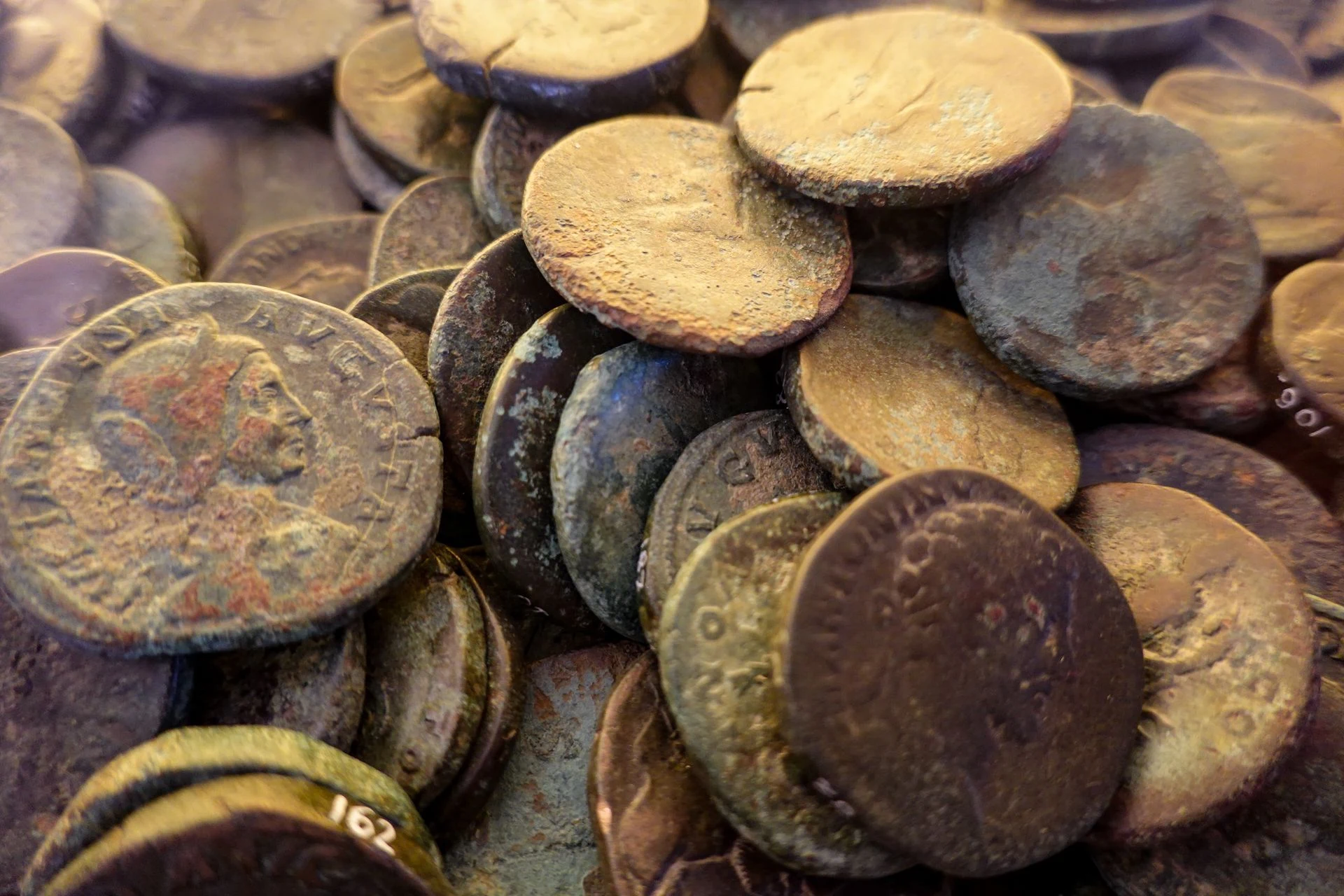
- coins, stamped or inscribed plaques;
- manuscripts and illuminated books, miniatures, engravings and paintings of artistic value;
- relics, decorations and medals;
- movable objects of tile, earthenware, glass, wood, textile and similar materials, and their fragments.
The same provision covers ethnographic cultural property relating to science, religion and mechanical arts that reflects the social life of the people, including man-made tools and implements. A second group protects documents and objects of historical value relating to the National Struggle and the foundation of the Republic, and Atatürk's personal belongings and papers.
Two features catch visitors out.
Fragments count. A sherd of pottery, a tessera from a mosaic, a piece of worked marble on the ground at an ancient site are protected property. So is a fossil found on a beach or a hillside.
There is no minimum value. The question is not what the object is worth but whether an expert classifies it as cultural or natural property requiring protection.
Why finds belong to the State
Movable and immovable cultural and natural property requiring protection, known to exist or later discovered on land belonging to the State, public bodies or private persons, has the status of State property (Art. 5). The finder does not become owner, and neither does the landowner.
Anyone who finds such property, and any owner or occupier who learns that it exists on his or her land, must report it within three days at the latest to the nearest museum directorate, to the village headman, or elsewhere to the local administrative authority (Art. 4). Reporting is what separates a lawful finder — who may be entitled to a reward under the regulations — from an offender.
Picking up an object at an archaeological site and putting it in a bag is therefore not a harmless souvenir. It is taking State property and, if it reaches the airport, attempted export.
What you can buy and take home
- Modern goods and reproductions. New carpets, ceramics, jewellery, copperware and replicas are not cultural property. Museum shops sell certified replicas with documentation.
- Late Ottoman coins — inside Turkey. Coins of the sultans Abdülmecid, Abdülaziz, Murad V, Abdülhamid II, Mehmed V Reşad and Vahideddin, and coins of the same period, may be bought and sold within the country without being subject to registration. Coins outside this description are subject to the general rules of the Law (Art. 23). Note the words "within the country": freedom to trade inside Turkey is not a licence to export, and older coins — Greek, Roman, Byzantine, Seljuk, earlier Ottoman — are protected.
- Ethnographic items. The purchase, sale and transfer of ethnographic cultural property within the country is free; the periods and characteristics of the items that may be freely traded are set by regulation (Art. 24). Again this concerns trade within Turkey.
- Objects classified as not requiring protection. Movable cultural property that the Ministry's experts leave outside classification and registration, and that museums do not need, may be traded by dealers holding a licence from the Ministry of Culture and Tourism (Art. 27). Trading in such items without a licence is itself an offence (Art. 67).
- Objects you brought with you. Bringing cultural property into Turkey from abroad is free (Art. 33). If you travel with something old — an instrument, a family heirloom, an antique watch — declare it to customs on arrival and keep the record, so that you can take it out again without dispute.
For anything old or old-looking that you intend to take out of Turkey, the safe course is to obtain a document from a museum directorate stating that the object is not cultural property requiring protection and may be exported. Reputable carpet and antique dealers arrange this for older pieces. A seller's own "certificate", a shop receipt or a verbal assurance has no legal value. If a seller will not help you obtain a museum document, do not buy.
The offences and penalties
| Conduct | Penalty | Article |
|---|---|---|
| Taking cultural or natural property abroad in breach of the Law | 5 to 12 years' imprisonment and a judicial fine of up to 5,000 days | 68 |
| Knowingly failing to report cultural or natural property without excuse | 6 months to 3 years | 67 |
| Offering for sale, selling, giving, buying or accepting cultural property that has not been reported | 2 to 5 years and a judicial fine of up to 5,000 days | 67 |
| Trading without permission in movable cultural property whose trade is not prohibited | 6 months to 3 years | 67 |
| Excavating or drilling without permission to find cultural property | 2 to 5 years (reduced by one third outside protected sites) | 74 |
| Treasure hunting without permission | 3 months to 2 years | 74 |
Where excavation or treasure hunting is carried out with the aim of smuggling cultural property abroad, the penalty may be increased up to twofold (Art. 74). Movable cultural and natural property seized in connection with offences under the Law is handed over to a museum (Art. 75); it is not returned.
The export offence is usually charged as an attempt, because the traveller is stopped before leaving. Attempt reduces the sentence under the general rules of the Penal Code but leaves it severe: the starting point is a five-year minimum.
The buyer is not protected by having paid for the object. A tourist who buys an unreported ancient coin commits the offence of buying unreported cultural property, even before reaching the airport.
What happens at the airport
Luggage is X-rayed on entry to the terminal and again before the gates. Stones, metal objects and coins show clearly. The usual sequence is:
- The bag is opened and the object set aside. Customs enforcement officers or police are called.
- A museum expert is contacted. At major airports an expert from the local museum directorate examines the object, often the same day, and gives a preliminary opinion.
- If the object is clearly modern, the traveller is released. The flight may be missed.
- If the expert considers it cultural or natural property, the object is seized, the traveller is taken into custody and the prosecutor is informed. A statement is taken with an interpreter and a lawyer.
- The prosecutor decides whether to release, to release subject to judicial control such as a ban on leaving the country, or to refer the traveller to a criminal judge of peace with a request for pre-trial detention.
What you say in the first statement matters. You are entitled to an interpreter, to a lawyer before and during questioning — appointed without charge on request — and to have your consulate informed. Do not sign a statement you have not had translated. See our guide to the rights of a foreigner arrested in Turkey.
Explain accurately where the object came from: who sold it, where, for how much, whether you have a receipt, photographs or card payment record; or where you picked it up. Hand over everything that supports the account. Do not minimise ("I don't know how it got there") if that is untrue; inconsistent statements are treated as evidence of awareness.
The expert report
The case turns on one question: is the object cultural or natural property requiring protection under Article 23? That is decided by expert report, first from the museum directorate and, if challenged, from a panel appointed by the court — typically archaeologists, art historians or, for fossils and minerals, geologists.
The report should state what the object is, its period, whether it is authentic, and whether it falls within the Law. Outcomes include:
- Not cultural property — a modern imitation, an ordinary stone, an item of no documentary value. The offence is not made out and the object is returned.
- Authentic and protected — the element of the offence is established, and the case turns on intent.
- Authentic but of a kind freely tradeable within Turkey — the export prohibition still has to be examined, but the assessment of intent and gravity changes.
A large proportion of "ancient" coins and figurines sold to tourists are fakes. Paradoxically that is good news for the buyer: a fake is not cultural property. The defence should always ask that authenticity be examined expressly, and should request a second panel where the first report is summary or was prepared without laboratory examination.
How these cases are defended
- The object is not protected property. Challenge the classification through a second expert panel with the right specialisms.
- No intent. The offence requires intent. A traveller who bought an item openly in a shop, at a price consistent with a souvenir, with a receipt, packed it in ordinary luggage without concealment and declared it when asked, has acted very differently from one who hid coins in a sock. Courts acquit where they are not satisfied that the accused knew, or accepted the possibility, that the object was protected cultural property. Evidence of the purchase is therefore decisive: keep receipts, the shop's card, photographs, messages.
- Mistake. A genuine and unavoidable mistake about the nature of the object excludes intent. A visitor's unfamiliarity with Turkish law is not in itself a defence, but the circumstances of the purchase can show that there was no reason to suspect.
- Classification of the conduct. Whether the facts amount to attempted export, to buying unreported property, or to failure to report makes a difference of years.
- Sentencing. Attempt, a clean record, cooperation and the low significance of the object all reduce the sentence; depending on the final term, deferment of the announcement of the verdict or suspension may be possible. For the excavation offences, handing over what was found to the local authority before an investigation begins allows the court to reduce the sentence by up to two thirds (Art. 74).
Do not expect the seller to be found. Street sellers disappear, and shops deny the sale unless there is a receipt. This is why documentation at the time of purchase is the only real protection.
Has a family member been stopped at a Turkish airport over a souvenir, coin or stone? The first statement and the first expert report shape the whole case. Message Yayla Law on WhatsApp or use the contact form with the airport, the date and what was found.
Detention, travel bans and leaving Turkey
Because the export offence carries a minimum of five years, prosecutors sometimes request pre-trial detention, and judges sometimes grant it, particularly where there are several objects, signs of concealment or no fixed address in Turkey. In many cases involving a single low-value item the suspect is released under judicial control instead — most often a ban on leaving the country, sometimes with a reporting obligation.
For a tourist, a ban on leaving is a serious matter in itself: it can last until the expert report arrives or until the first hearing, which may be months away, while the visa-exempt period runs out and employment at home is at risk. The measure can be challenged before the criminal judgeship of peace and its lifting requested as soon as the expert report, the statement and an address for service through a lawyer are in the file. Remaining in Turkey because of a court-imposed ban is a recognised reason for staying beyond the permitted period, but the immigration side must be regularised with the migration authorities. See our guide to judicial control and travel bans in Turkey.
Once the ban is lifted the accused can usually return home and be represented at trial by a lawyer. A conviction, or even a pending case, may lead to a deportation decision and an entry ban; see our guide to deportation after a criminal conviction.
Residents, collectors and finds on your land
- Finds during building or gardening. Report within three days to the museum directorate or the district governor's office. Work must stop in the area concerned. Concealing a find is an offence; reporting it is not an admission of anything.
- Metal detectors. Searching for treasure without a permit is an offence, and digging to find cultural property a more serious one. Treasure-hunting permits exist but are not available for archaeological sites and protected areas.
- Collecting. Private persons may form collections of movable cultural property with a permit from the Ministry of Culture and Tourism, under museum supervision and with an inventory. Collecting without that status is not lawful possession.
- Buying from an estate or an auction. Those selling goods and estates that include movable cultural property, and auctioneers, must first notify and show them to State museums (Art. 30). Ask for evidence that this was done.
- Old houses. Buildings may themselves be registered immovable cultural property, with strict limits on alteration. Check the land registry record before buying a historic property; see our guide to buying property in Turkey as a foreigner.
Practical rules for visitors
- Take nothing from archaeological sites, beaches near ruins, or the ground anywhere: no stones, sherds, tesserae, fossils or shells embedded in rock.
- Do not buy coins, figurines, oil lamps, seals or "ancient" jewellery from street sellers, at sites or in bazaars. If genuine they are illegal; if fake you have been cheated — and you may still be detained while it is established which.
- Buy older carpets, kilims, copperware and similar pieces only from established dealers who provide an invoice and, for anything old, a museum document for export.
- Keep invoices and card slips with the item in your hand luggage.
- Declare on arrival any old object you are bringing into Turkey and will take out again.
- If stopped, stay calm, ask for an interpreter and a lawyer, tell the truth about the source and hand over proof of purchase.
- Do not argue with or insult officers. That is a separate offence; see our guide to insult offences in Turkey.
Frequently asked questions
Can I take antiques out of Turkey?
Not if they are cultural or natural property requiring protection. For any old object, obtain a museum directorate document confirming that it may be exported. Modern goods and reproductions are not restricted.
What is the penalty for trying to take an antique out of Turkey?
Five to twelve years' imprisonment and a judicial fine for exporting protected property, reduced where the offence remains an attempt.
Is it illegal to pick up a stone or pottery fragment from an ancient site?
Yes. Fragments are protected and are State property. Trying to leave with one can be prosecuted as attempted export.
Can I buy old coins in Turkey?
Late Ottoman coins from the reign of Abdülmecid onwards may be traded within Turkey. Older coins are protected. Freedom to trade inside Turkey does not by itself permit export.
I bought it in a shop. Am I still liable?
A purchase does not make export lawful. A receipt, an open sale and a souvenir price are, however, strong evidence that you had no intent to smuggle, which is the central issue in most tourist cases.
What if the object turns out to be fake?
A fake is not cultural property, and the offence is not made out. Ask that the expert report address authenticity expressly.
Will I be held in prison?
Possibly, where there are several items or signs of concealment. More often the suspect is released under a ban on leaving Turkey until the expert report is received.
How do I get an export certificate?
Take the object, or have the dealer take it, to a museum directorate, which examines it and issues a document if it is not protected property.
I found something on my land. What should I do?
Report it within three days to the nearest museum directorate or local authority. Do not move, clean or keep it.
Legal basis and sources
- Law No. 2863 on the Conservation of Cultural and Natural Property, Articles 4, 5, 23–27, 30, 32, 33, 67, 68, 74 and 75 — official consolidated text at mevzuat.gov.tr.
- Turkish Penal Code No. 5237 (attempt, intent and mistake); Criminal Procedure Code No. 5271.
- Ministry of Culture and Tourism, Directorate General of Cultural Heritage and Museums — kvmgm.ktb.gov.tr.
This article provides general legal information on Turkish law as of October 2026. It is not legal advice. Whether an object is protected is decided by expert examination in each case.