Drunk-Driving in Turkey: Limits, Fines, Licence Withdrawal and Criminal Charges
Driving a private car in Turkey (Türkiye) with a blood alcohol level above 0.50 promille is prohibited; for all other vehicles the limit is 0.20. Under the Road Traffic Law No. 2918 as amended in February 2026, a first offence carries an administrative fine of 25,000 Turkish lira and withdrawal of the driving licence for six months; a second within five years, 50,000 lira and two years; a third or later, 150,000 lira and five years each time (Art. 48). A driver found above 1.00 promille is, in addition, prosecuted under Article 179(3) of the Penal Code, which punishes driving while unable to drive safely with six months' to two years' imprisonment. Refusing the test costs 150,000 lira and a five-year withdrawal.
Visitors and foreign residents are caught by these rules in ordinary situations: a hire car after dinner, a routine checkpoint on a coastal road, a minor collision in which the police test everyone involved. This guide explains the limits, the roadside procedure and your rights in it, the administrative and criminal consequences, what happens when alcohol is combined with an accident, and how a fine or prosecution can be challenged.
- Limits: 0.50 promille for private cars; 0.20 for other vehicles — commercial, public service and official vehicles, motorcycles used commercially, lorries, buses, taxis.
- First offence: 25,000 TL fine, licence withdrawn for six months.
- Second in five years: 50,000 TL, two years. Third or more: 150,000 TL, five years each time.
- Above 1.00 promille: criminal prosecution in addition, six months to two years' imprisonment.
- Refusing to be tested: 150,000 TL and five-year withdrawal.
- Drugs: 150,000 TL, cancellation of the licence, and criminal proceedings.
- Accident while over the limit: the Penal Code's provisions on injury or death apply as well.
- Objection to the fine: to the criminal judgeship of peace within fifteen days.
Legal status of this guide. It reflects Article 48 of the Road Traffic Law as amended by Law No. 7574 of 12 February 2026, the Turkish Penal Code No. 5237 and the Misdemeanours Law No. 5326. The fine amounts are those written in the Law at that amendment; fines in the Road Traffic Law are increased each January by the revaluation rate, so the figures actually applied in later years will be higher. Last updated: October 2026.
In this guide
- The limits
- At the roadside
- Refusing or disputing the test
- Administrative penalties
- The criminal offence
- Alcohol and an accident
- Drugs
- What happens to the licence — and to foreign licences
- Insurance and hire cars
- Challenging the fine or defending the case
- Immigration consequences
- Frequently asked questions
The limits
| Driver | Limit |
|---|---|
| Private car (hususi otomobil) | 0.50 promille |
| All other vehicles | 0.20 promille — the text sets the lower threshold at 0.21 for vehicles other than private cars |
| Criminal threshold for any driver | Above 1.00 promille: Penal Code Art. 179(3) applies in addition |
- Promille means grams of alcohol per litre of blood; 0.50 promille corresponds to 0.05 per cent in the notation used in some other countries.
- No safe number of drinks. Body weight, sex, food and time all change the result. Two drinks can put a smaller person over the private-car limit.
- The morning after. Alcohol is eliminated slowly; a driver can still be over the limit at breakfast.
- Hire cars are private cars for this purpose; a transfer minibus, taxi or tour vehicle is not.
- Motorcycles, mopeds and electric scooters are vehicles; riding them under the influence is covered by the traffic rules, with their own provisions for scooters.
At the roadside
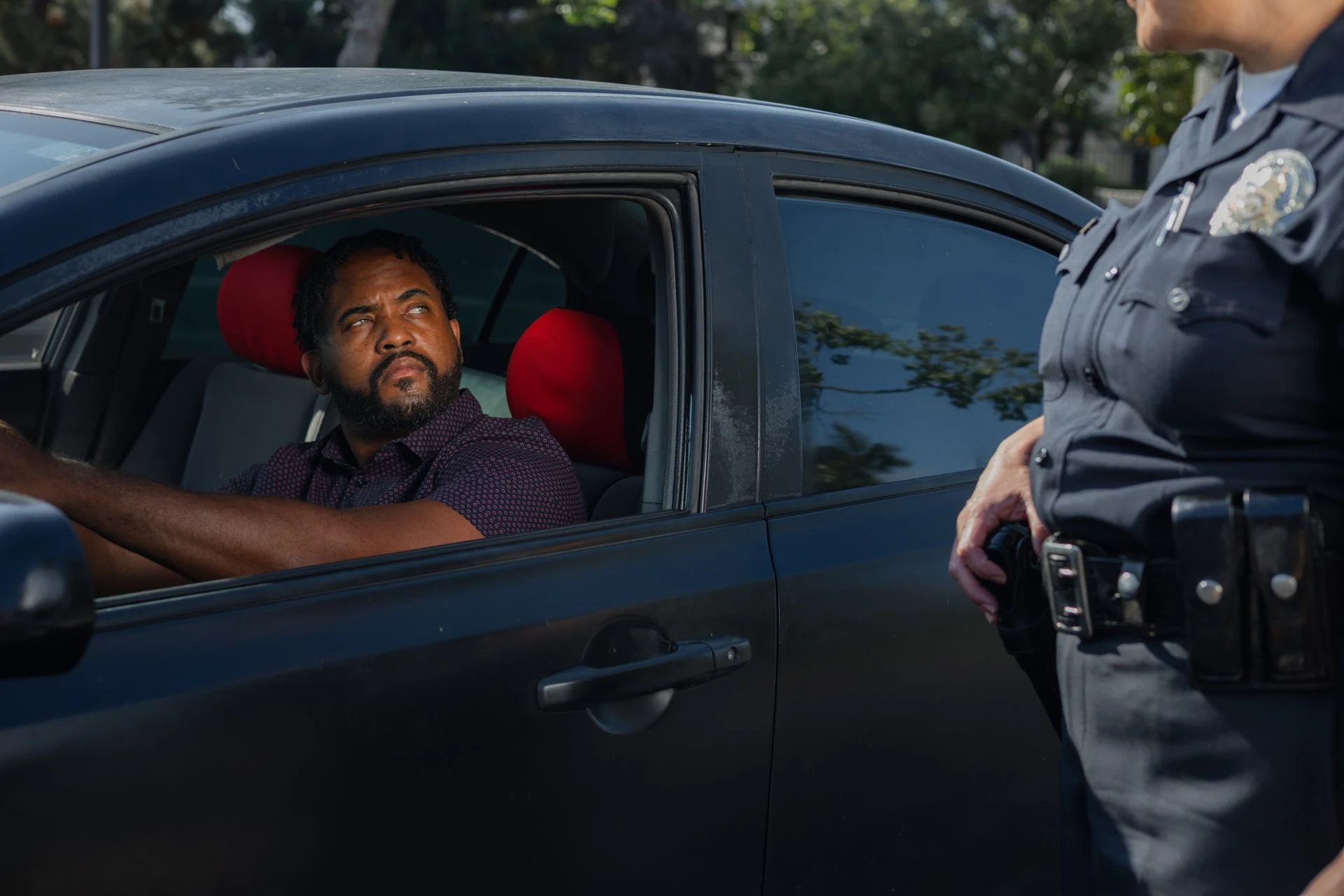
- The stop. Traffic police and gendarmerie may stop vehicles for routine checks without suspicion. You must stop, and produce your licence, passport or identity card, the registration and insurance documents or the rental agreement.
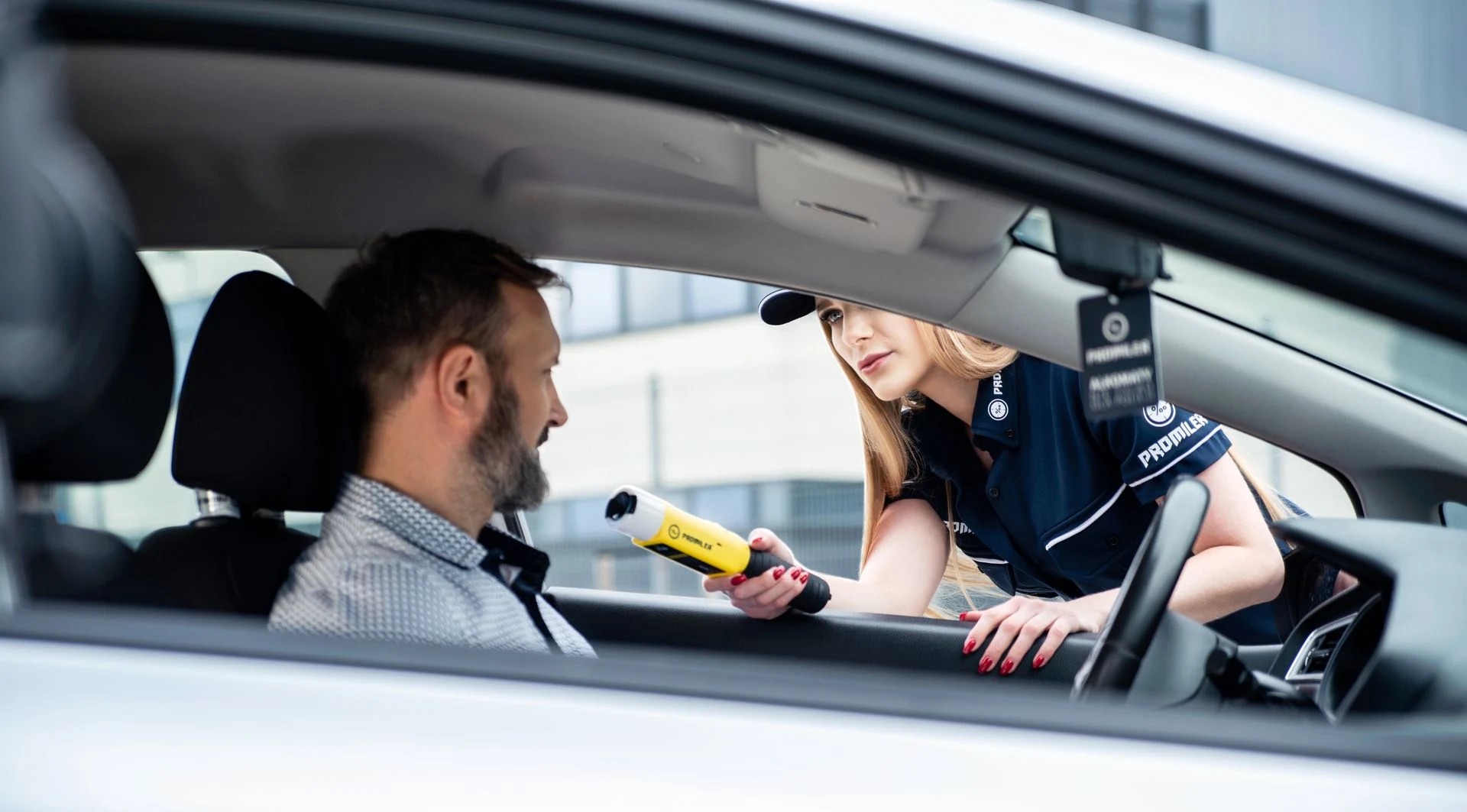
- The test. "Technical devices or test kits are used by law enforcement to determine whether narcotic or stimulant substances have been used or the amount of alcohol in the blood" (Art. 48). You blow into a breath analyser, which prints a ticket showing the reading, date, time and device number.
- Mandatory testing after accidents. A person involved in a traffic accident with injury or death, or in a damage-only accident attended by the police, must be tested.
- The record. If the reading is over the limit, the officer draws up a traffic administrative fine report and a licence withdrawal report. Read them, or ask what they say; you may write that you do not understand Turkish or that you object. Signing acknowledges receipt, not guilt. Keep your copies and the device printout.
- The vehicle. You may not continue driving. The car is handed to a sober licensed person you nominate, or towed to a pound at your cost.
- Above 1.00 promille, or after an accident with injury, you are taken to the station; the prosecutor is informed; a statement is taken with a lawyer and an interpreter. See our guide to rights on arrest.
Refusing or disputing the test
- Refusal. "Drivers who do not allow measurement by law enforcement to determine whether narcotic or stimulant substances have been used or the amount of alcohol in the blood are given an administrative fine of 150,000 Turkish lira and their driving licence is withdrawn for five years" (Art. 48(9), as amended). Refusal is therefore punished as heavily as a third alcohol offence — more heavily than any first-time reading.
- Disputing the device. A driver who objects to the device's measurement, or does not allow it, is taken to the nearest forensic medicine unit or Ministry of Health facility, where blood, saliva or urine samples are taken. The rules of the Criminal Procedure Code on physical examination apply to this sampling.
- When to ask for a blood test. If you believe the reading is wrong — a recent mouthwash, a medical condition, a device fault — say so at once and ask to be taken for a blood test; have the request written into the report. Blood analysis is the more reliable evidence, and time matters because the level changes.
- Unconscious or seriously injured drivers, and those killed in accidents, are sampled without the breath test.
- Suspicion of drugs brings the judicial police provisions into play: the matter becomes a criminal investigation from the start.
Administrative penalties
| Offence within the preceding five years | Fine (as enacted February 2026) | Licence withdrawn | Additional measure |
|---|---|---|---|
| First | 25,000 TL | 6 months | — |
| Second | 50,000 TL | 2 years | Driver behaviour improvement training run by the Ministry of Health |
| Third and each subsequent | 150,000 TL | 5 years each time | Psycho-technical assessment and psychiatric examination |
| Refusing measurement | 150,000 TL | 5 years | — |
- The fine is imposed "even if the act constitutes a crime": it is not replaced by a prosecution, and a prosecution is not replaced by the fine.
- Counting. The five-year window is counted backwards from the latest offence.
- Running of periods. If the licence was already temporarily withdrawn for another reason, the new period starts when the earlier one ends.
- Return of the licence. A temporarily withdrawn licence is returned only when all administrative fines imposed on the person under the Road Traffic Law have been collected (Art. 48, as amended in 2026).
- Payment. Administrative fines whose own law sets no payment period are payable within one month of notification, with a twenty-five per cent reduction if paid within that period (Misdemeanours Law, Art. 17). Paying does not prevent an objection.
- Driving while the licence is withdrawn is a separate offence with its own heavy fine and consequences for the vehicle.
The criminal offence
- Text. "A person who drives a vehicle although he or she is not in a condition to drive safely because of the effect of alcohol or narcotic substances or for another reason is punished with imprisonment from six months to two years" (Penal Code, Art. 179(3)).
- Trigger. For drivers found above 1.00 promille, the Road Traffic Law directs that Article 179(3) is applied (Art. 48). Below that level, the offence can still be charged where the evidence — a doctor's examination, the manner of driving, video — shows the driver was not able to drive safely; and an accident above the administrative limit brings the Penal Code into play in any case.
- Nature. It is an offence of danger: no accident and no victim are required. It is prosecuted of the prosecutor's own motion; there is no complainant who could withdraw.
- Dangerous driving. Driving in a manner that may endanger life, health or property is separately punished under Article 179(2) with four months' to two years' imprisonment.
- Procedure. The offence is within the fast-track procedure: the prosecutor may offer a sentence reduced by half, to be accepted in the presence of a defence lawyer, and approved by the court without trial. Acceptance results in a conviction. See our guide to fast-track procedure.
- Likely outcome for a first offender: a short prison sentence converted into a judicial fine or other alternative sanction, suspended, or subject to deferral of the announcement of the verdict where the conditions are met. See deferred verdicts and judicial fines.
- Detention before trial is unusual for this offence alone; judicial control measures — including a travel ban — are possible, particularly for non-residents. See judicial control and travel bans.
- Record. A conviction is entered in the criminal record. See criminal records.
Alcohol and an accident
- Rule. "Where drivers who are above 0.50 promille for private cars, or above 0.20 promille for other vehicles, cause a traffic accident, the relevant provisions of the Turkish Penal Code are also applied" (Art. 48).
- Negligent injury (Penal Code, Art. 89) and negligent killing (Art. 85) are charged, and driving after drinking is typically treated as conscious negligence, which increases the penalty by one third to one half and removes some of the more lenient options — in particular, conversion of the prison sentence to a fine is restricted.
- Complaint. Simple negligent injury is prosecuted on complaint and can be settled by mediation with the victim; with conscious negligence, the more serious forms are prosecuted regardless of complaint.
- Licence. On conviction for a negligent offence committed in breach of the care required by traffic rules, the court may order withdrawal of the driving licence for three months to three years in addition (Art. 53(6)).
- Leaving the scene after an accident with injury makes everything worse: the duty to stop, give details, help the injured and inform the police is statutory, and abandoning an injured person can be a separate offence.
- Civil liability for damages to the injured and to the dependants of the deceased is separate and substantial.
See our guides to traffic accident compensation and pre-trial detention.
Drugs
- "Drivers found to have taken narcotic or stimulant substances are subject to an administrative fine of 150,000 Turkish lira and their driving licence is cancelled. The provisions of the Turkish Penal Code are also applied to these persons" (Art. 48(8), as amended in 2026).
- Cancellation is not suspension. To drive again the person must attend a driving course and pass the examinations afresh — and may begin the course only when at least five years have passed since the cancellation, all administrative fines have been collected, a psycho-technical assessment has been passed and a medical board report confirms fitness to drive.
- Criminal exposure: Article 179(3), and the offences of possessing or using drugs. See our guide to drug offences in Turkey.
- Prescription medicines that impair driving can bring a driver within "another reason" in Article 179(3); carry the prescription.
What happens to the licence — and to foreign licences
- Turkish licence. The physical licence is taken at the roadside against a report; the withdrawal is entered in the police system. After the period, it is returned on application, subject to payment of all fines and completion of any required training or assessment.
- Foreign licence. The prohibition on driving in Turkey for the withdrawal period applies to a foreign licence holder too, and is recorded against the person's identity. The handling of the physical foreign document follows the traffic regulation's rules for licences issued abroad; ask for a written record of what was done with yours and how to recover it on leaving Turkey.
- Effect abroad. A Turkish withdrawal does not by itself cancel a foreign licence in the issuing country, but a conviction may be communicated between states and can have consequences under the home country's law.
- Driving during withdrawal with any licence is an offence.
- Residents who are required to exchange a foreign licence for a Turkish one, and have not, face separate fines. See our guide to driving in Turkey with a foreign licence.
Insurance and hire cars
- Compulsory liability insurance pays injured third parties up to its limits even where the driver was drunk — but the insurer has a right of recourse against its own insured where the accident resulted from driving under the influence, and will claim back what it paid.
- Comprehensive (kasko) cover excludes damage to your own vehicle where the accident was caused by the driver's intoxication. Under case law the exclusion applies where alcohol was the exclusive cause; expert evidence on causation therefore matters.
- Hire cars. Rental contracts make the hirer personally liable for all damage, loss of use and third-party claims where the driver was over the limit or refused the test; collision damage waivers do not apply. Towing and pound fees are also the hirer's.
- Passengers who knowingly ride with a drunk driver may have their compensation reduced for contributory fault.
- Travel insurance commonly excludes injury sustained while driving over the legal limit.
Challenging the fine or defending the case
The administrative fine and withdrawal
- Objection to the criminal judgeship of peace within fifteen days of notification of the fine report. The judge decides on the file, usually without a hearing; a further objection lies to another judgeship.
- Grounds that succeed: the device was not calibrated or its certificate had expired; the printout is missing, illegible or does not match the report; the driver's request for a blood test was ignored; the wrong limit or wrong category of vehicle was applied; the earlier offences counted fall outside the five-year window; identity error; the person was not driving.
- Grounds that do not: "I felt fine"; "I only had two"; "nobody told me the limit".
- The objection does not suspend the withdrawal unless the judge orders it.
The criminal case
- Do not give a statement without a lawyer. An interpreter is a right.
- Have the blood analysis and the timing examined: the level at the time of driving may differ from the level at sampling.
- Consider the fast-track offer carefully. It halves the sentence but produces a conviction; a trial may end in acquittal where "inability to drive safely" is not proved, or in a deferred verdict that leaves no conviction on the record.
- Appeal periods are two weeks. See our guide to criminal appeals.
- Tourists who have left Turkey can be represented; unanswered summonses lead to warrants that surface at the next entry.
Immigration consequences
- A drink-driving fine alone does not affect a residence permit.
- A criminal conviction, an unpaid fine or a pending case is seen at extension and in citizenship applications, where good conduct is assessed.
- Deportation is not a standard consequence of this offence; it becomes a risk where the authority assesses a threat to public order, typically after repeated offences or an accident with casualties. See our guide to deportation after conviction.
- Unpaid administrative fines can be collected as public debts and can be raised at the border. See debts and leaving Turkey.
Fined or charged for drink-driving in Turkey? Send the fine report, the device printout and any court papers. Message Yayla Law on WhatsApp or use the contact form. The objection period is fifteen days from notification.
Frequently asked questions
What is the legal alcohol limit for driving in Turkey?
0.50 promille for private cars and 0.20 for other vehicles.
What is the penalty for a first offence?
A fine of 25,000 TL as enacted in 2026, revalued annually, and withdrawal of the licence for six months.
When does drink-driving become a crime?
Above 1.00 promille, or at a lower level if the driver was not able to drive safely or caused an accident. The penalty is six months to two years' imprisonment.
Can I refuse the breathalyser?
Refusal is punished with a 150,000 TL fine and a five-year licence withdrawal. You can dispute the device and ask for a blood test instead.
Do these rules apply to tourists with a foreign licence?
Yes. The fine, the driving ban in Turkey and any prosecution apply regardless of where the licence was issued.
What if I was in an accident?
Testing is mandatory. If you were over the limit, the Penal Code's provisions on negligent injury or death apply, usually with increased penalties.
Will insurance cover the damage?
Third parties are paid by the compulsory insurance, which then claims against you. Damage to your own or the hire car is generally excluded.
How do I challenge the fine?
By objection to the criminal judgeship of peace within fifteen days.
Is there a discount for paying early?
Yes, twenty-five per cent if paid within the payment period.
Legal basis and sources
- Road Traffic Law No. 2918, Articles 48, 81 and 82, as amended by Law No. 7574 of 12 February 2026 — official consolidated text at mevzuat.gov.tr.
- Turkish Penal Code No. 5237, Articles 22, 53, 85, 89 and 179 — mevzuat.gov.tr.
- Misdemeanours Law No. 5326, Articles 17 and 27; Criminal Procedure Code No. 5271, Articles 75 and 250.
- Road Traffic Regulation.
This article provides general legal information on Turkish law as of October 2026. It is not legal advice. Fine amounts are revalued each year.