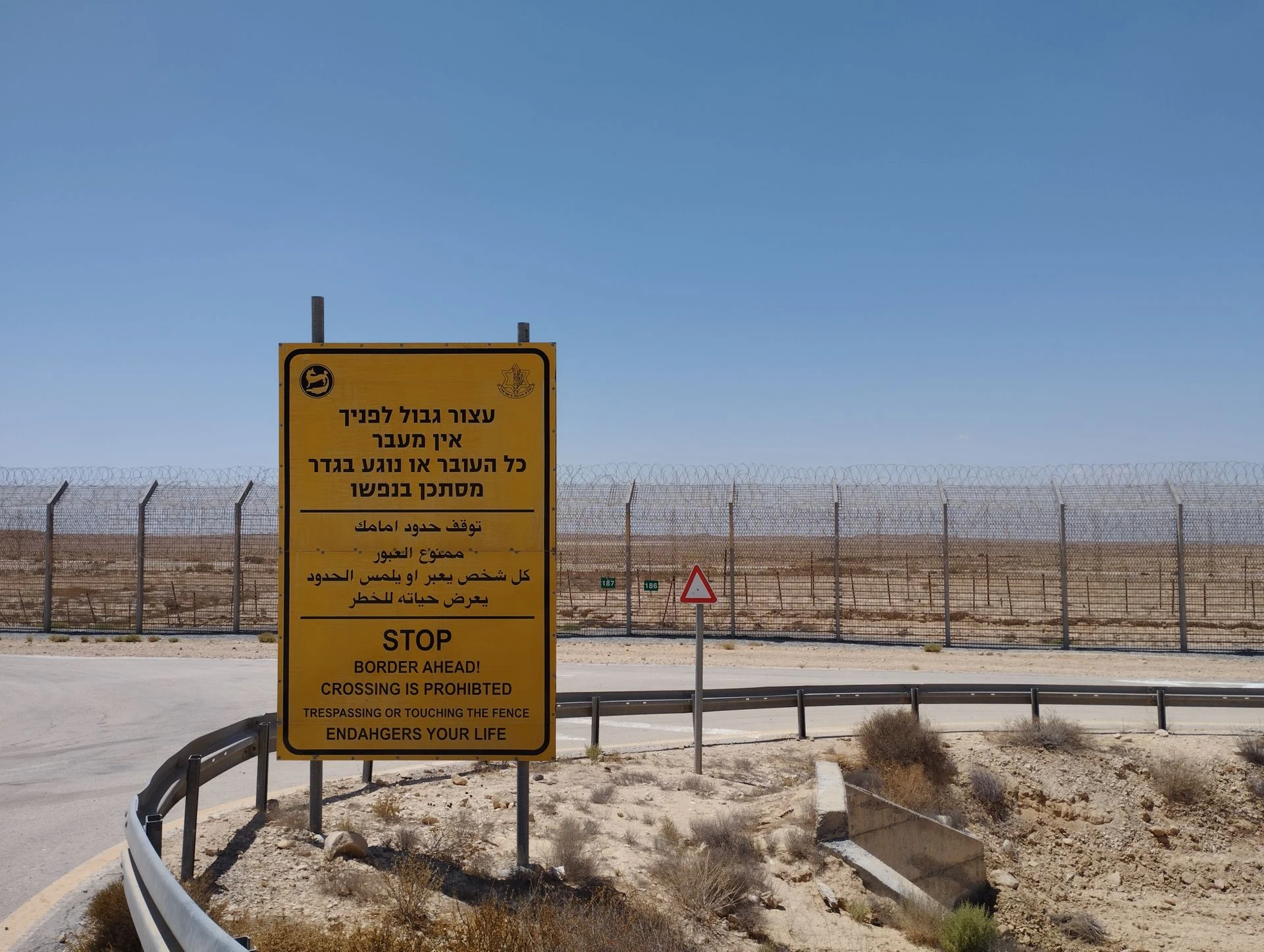
Illegal Entry into Turkey and Migrant Smuggling: Penalties, Deportation and Asylum
Entering or leaving Turkey (Türkiye) other than through a border gate with a valid passport is not a crime punished with imprisonment for the migrant: it is an administrative offence carrying a fine, and it leads to a deportation decision, possible administrative detention and an entry ban (Law on Foreigners and International Protection No. 6458, Art. 5, 54, 102). The crime is migrant smuggling: anyone who, for material benefit, brings a foreigner into the country or enables a foreigner to stay by unlawful means, or enables anyone to leave unlawfully, faces five to eight years' imprisonment and a heavy fine — and an attempt is punished as if completed (Turkish Penal Code No. 5237, Art. 79). A person who applies for international protection of his or her own accord within a reasonable time is not penalised for the irregular entry (Law No. 6458, Art. 65(4)).
The distinction between being smuggled and smuggling is the most important thing to understand, because people who thought they were only passengers are regularly charged as smugglers: the migrant who steered the boat for a discount, the driver who gave a lift, the relative who paid for a crossing, the landlord who rented a flat. This guide explains both sides.
- Lawful entry and exit: through border gates, with a valid passport or equivalent document (Art. 5).
- Irregular entry or exit, or attempt: administrative fine (Art. 102(1)(a)).
- Deportation: a decision is issued for those who breach the rules on lawful entry or exit (Art. 54).
- Entry ban: up to five years; up to ten more for serious public-order or security threats (Art. 9).
- Asylum applicants: no penalty for irregular entry if they apply by themselves within a reasonable time and explain valid reasons (Art. 65(4)).
- Migrant smuggling: five to eight years and a judicial fine of 1,000 to 10,000 days; attempt punished as the completed offence (Penal Code Art. 79(1)).
- Aggravation: danger to life or degrading treatment; several offenders acting together; organised activity (Art. 79(2), (3)).
- Helping, transporting, housing or renting to undocumented foreigners: administrative fine per foreigner where the act is not a crime (Art. 102(2)).
Legal status of this guide. It reflects Law No. 6458 and the Turkish Penal Code as in force. The fine amounts written in the Law are base figures that are revalued each year and are not stated here. Last updated: October 2026.
In this guide
- The rule on entry and exit
- Consequences for the person who crossed
- Irregular entry and asylum
- Apprehension and administrative detention
- The crime of migrant smuggling
- Migrants accused of smuggling
- Drivers, landlords, employers and relatives
- Rights of smuggled migrants
- Leaving Turkey irregularly
- Regularising status afterwards
- Frequently asked questions
The rule on entry and exit
Entry into and exit from Turkey take place through border gates, with a valid passport or a document in lieu of a passport (Art. 5). The foreigner must show the document to officials on entry and exit (Art. 6). Irregular entry therefore covers crossing the land border away from a gate, landing by sea outside a port of entry, passing a gate hidden in a vehicle, and passing a gate with a document that is forged or belongs to someone else.
Entering lawfully and then staying beyond the visa or permit is a different situation — overstay — with its own fines and bans; see our guide to overstaying in Turkey. Entering with forged documents adds a criminal offence; see our guide to forged documents in Turkey.
Consequences for the person who crossed
| Consequence | Basis | Notes |
|---|---|---|
| Administrative fine | Art. 102(1)(a) | For foreigners who enter or leave Turkey illegally, or attempt to. Unless another law provides a heavier penalty. |
| Administrative fine | Art. 102(1)(b) | For those who managed to enter although banned from entry. |
| Fine increased by half | Art. 102(3) | If repeated within the same calendar year. |
| Deportation decision | Art. 54 | Issued for those who breach the provisions on lawful entry or exit. Subject to the protected categories. |
| Administrative detention | Art. 57 | Possible pending removal, on the grounds listed in the Law. |
| Entry ban | Art. 9 | Deported foreigners are banned; up to five years, extendable by up to ten for serious threats. |
Fines must be paid within thirty days of notification (Art. 102(5)). Applying a fine does not prevent the other administrative measures (Art. 102(4)). Non-payment of fines is one of the matters taken into account when an entry ban is imposed and later when a visa is sought.
There is, in other words, no prison sentence for the simple act of crossing irregularly. But "unless another law provides a heavier penalty" matters: entering a military prohibited zone, using a forged passport, or assaulting or resisting border officers are crimes in their own right.
The deportation decision
The governorate issues the decision. It must be notified with reasons, and it can be appealed to the administrative court within seven days; subject to the exceptions in the Law, the person is not removed during the appeal period or while the appeal is pending. Certain people cannot be deported at all — those who would face death, torture or inhuman treatment in the destination country, those for whom travel is dangerous because of serious illness, age or pregnancy, those receiving life-saving treatment unavailable at home, and victims of trafficking and of serious violence undergoing support. See our guides to appealing a deportation order and who cannot be deported from Turkey.
Irregular entry and asylum
People fleeing persecution can rarely obtain passports and visas. The Law recognises this. No penal action is taken for breaching the conditions of lawful entry, or for being in Turkey unlawfully, against those who of their own accord apply to the governorate for international protection within a reasonable time, provided they explain the valid reasons for their irregular entry or stay (Art. 65(4)).
Three conditions are built into that sentence.
- Of their own accord. The protection is aimed at the person who comes forward, not the person who mentions asylum for the first time after being apprehended weeks later. An application made after apprehension is still an application and must be registered, but the exemption from penalties is no longer assured.
- Within a reasonable time. The Law sets no number of days. Days are reasonable; many months of living undeclared are not, without a good explanation.
- Valid reasons. Why a regular entry was impossible, and why the application was not made sooner.
Applications are made in person to the governorate — in practice the provincial migration directorate. If the wish to apply is expressed to law enforcement units inside the country or at a border gate, they must notify the governorate at once (Art. 65(2)); applications by persons deprived of liberty must be notified to the governorate immediately (Art. 65(5)). A person in a removal centre can therefore apply from there. Receiving and assessing an application does not, however, prevent other judicial and administrative procedures and measures from being applied.
An applicant for international protection cannot be removed while the application is being decided, subject to the limited exceptions in the Law. The procedure is described in our guide to applying for asylum in Turkey, and the special regime for those arriving from Syria in our guide to temporary protection.
Apprehension and administrative detention
People apprehended after an irregular crossing are handed by the gendarmerie, coast guard or police to the provincial migration directorate. The governorate must decide within forty-eight hours whether to issue a deportation decision. If it does, it may order administrative detention where one of the statutory grounds is present — risk of absconding, breach of entry or exit rules, use of false documents, failure to leave within the period granted, or a threat to public order, security or health.
Detention takes place in a removal centre, is limited to six months and can be extended by a further six where removal cannot be completed because of the person's lack of cooperation or failure to provide correct information or documents. Its necessity must be reviewed every month. The detainee can apply to the criminal judgeship of peace, which decides within five days; the application can be repeated if circumstances change. Alternatives to detention — residence at an address, reporting, a guarantor, electronic monitoring — exist and should be requested. A detainee has the right to a lawyer, to legal aid if without means, to contact relatives, the consulate and the UN refugee agency. See our guides to administrative detention in removal centres and legal aid for foreigners.
What is said and signed in the first hours matters. Forms presented at this stage can include a "voluntary return" declaration. Signing one ends the protection that an appeal or an asylum application would give. No one is obliged to sign it; see our guide to voluntary return from Turkey.

The crime of migrant smuggling
Article 79 of the Penal Code punishes a person who, in order to obtain material benefit directly or indirectly, by unlawful means:
- brings a foreigner into the country or enables a foreigner to stay in the country; or
- enables a Turkish citizen or a foreigner to go abroad.
The penalty is five to eight years' imprisonment and a judicial fine of one thousand to ten thousand days. Even if the offence remains at the stage of attempt, the penalty is imposed as if it were completed.
| Aggravating circumstance | Increase |
|---|---|
| The offence endangers the victims' lives | By one half to two thirds (Art. 79(2)) |
| The offence is committed by subjecting victims to degrading treatment | By one half to two thirds (Art. 79(2)) |
| Committed by more than one person acting together | By up to one half (Art. 79(3)) |
| Committed within the activities of an organisation | By one half to double (Art. 79(3)) |
| Committed within the activities of a legal entity | Security measures against the entity (Art. 79(4)) |
An overloaded dinghy or a sealed lorry compartment almost always satisfies the danger-to-life aggravation, and smuggling is almost always committed by several people. Realistic sentences are therefore well above the five-year minimum, and suspects are routinely held in pre-trial detention. Vehicles and boats used are confiscated.
What the prosecution must prove
- An act of bringing in, enabling to stay, or enabling to leave — transporting, guiding, sheltering in connection with a crossing, supplying forged documents, arranging the route.
- Unlawful means.
- The purpose of material benefit. This element separates the smuggler from the person who helps for family or humanitarian reasons. A benefit can be indirect: a reduced fare, a debt cancelled, a free passage.
- Intent — knowledge that the people concerned are crossing or staying unlawfully.
The migrant who is smuggled is not an accomplice. The person whose entry or exit is being arranged is treated as the victim of the offence and is heard as a witness.
Migrants accused of smuggling
The cases that reach defence lawyers most often do not involve organisers. They involve people at the bottom:
- The passenger who steered. Smugglers rarely board the boats. They choose a passenger to hold the tiller, sometimes by force, sometimes for a discount or free passage. That person is then charged as the smuggler, and a discount is treated as material benefit.
- The passenger who helped — distributed life jackets, translated instructions, collected money from fellow passengers to pass on.
- The driver hired for a fare to carry people between cities, who says he did not know they were undocumented.
- The relative who paid for and organised the crossing of family members.
The defence in these cases concentrates on the benefit element and on intent: Was this person paying, like the others, for his own passage? Did he receive anything? Was he forced? What do the other passengers say — and were they asked properly, with an interpreter, before being deported? Telephone records, payment evidence and the statements of fellow travellers are decisive, and the last disappear quickly because witnesses are removed from the country. A request to take witness statements before a judge at the investigation stage should be made at once.
Anyone questioned on suspicion of smuggling is entitled to a lawyer from the first moment; because the minimum sentence in aggravated forms exceeds five years, a lawyer must be present whether or not requested. See our guide to the rights of a foreigner arrested in Turkey.
Has a relative been apprehended after a crossing, or accused of smuggling? Witnesses are deported within days and the deportation appeal period is seven days. Message Yayla Law on WhatsApp or use the contact form with the person's name, nationality and where they are held.
Drivers, landlords, employers and relatives
Below the threshold of the crime, the Law imposes administrative fines. Persons who enable foreigners without a valid travel document, a foreigner identity card issued by the Turkish authorities, a residence permit or a valid travel permit to enter the country, to be taken out of it, to travel within it by any vehicle or on foot, to be sheltered or accommodated, and persons who rent out their real estate to them, are fined for each such foreigner, where the acts are not separately defined as crimes (Art. 102(2)). Carriers who fail in their obligations are fined separately.
The consequences for ordinary life in Turkey are concrete:
- Landlords should see and copy a valid passport with visa or residence permit, or a protection identity document, before renting. See our guide to tenancy law in Turkey.
- Taxi, minibus and private drivers who carry undocumented passengers between provinces risk a fine per passenger and, if money beyond a normal fare or knowledge of a crossing is shown, a smuggling charge and loss of the vehicle.
- Employers of undocumented workers face separate fines under the labour-migration legislation; see our guide to working without a work permit.
- Family members in Turkey who arrange a relative's irregular entry are exposed to the fine and, if payment to smugglers passes through their hands, to investigation for participation in smuggling. Lawful family routes are described in our guide to family residence permits.
Rights of smuggled migrants
- Witness and victim status in the criminal case against the smugglers, with the right to an interpreter and to file a complaint and claim compensation for harm suffered — abandonment, violence, extortion, death of relatives.
- The right to apply for international protection, at any stage, including from a removal centre.
- Protection from removal where the conditions of non-refoulement are met.
- Trafficking is different. Where a person was recruited or moved for exploitation — forced labour, prostitution, servitude — by threat, coercion or deception, the offence is human trafficking, and the victim is entitled to a special residence permit and support and cannot be deported during that process. Smuggling can turn into trafficking when a debt for the journey is used to compel work. See our guide to victims of human trafficking in Turkey.
- Unaccompanied children are placed under the care of the child-protection authorities, not in removal centres with adults.
Leaving Turkey irregularly
The same rules apply in the outbound direction. A foreigner who leaves or attempts to leave other than through a border gate is fined and becomes subject to deportation and an entry ban, and those who organise the departure for benefit commit migrant smuggling.
People with a legal problem in Turkey sometimes consider leaving irregularly: those subject to a court-ordered ban on leaving the country, those with an overstay they fear will be discovered at the gate, those with pending criminal proceedings. Doing so converts a manageable problem into several serious ones. A person under judicial control who leaves in breach of the ban faces an arrest warrant and detention on return; the irregular exit adds an entry ban; and the case continues in absence. An overstay is resolved by paying the fine at the border, usually with a limited ban or none. Our guide to judicial control and travel bans explains how a ban can be lifted lawfully.
People holding international or temporary protection status who leave Turkey irregularly are treated as having withdrawn from the procedure or lose their status, and re-registration on return is not assured.
Regularising status afterwards
An irregular entry cannot simply be converted into a residence permit: ordinary residence permit applications presuppose a lawful entry. The routes that remain are narrow.
- International protection, where the person has a claim.
- Humanitarian residence permit, which can be granted without the usual conditions, among others where a deportation decision cannot be executed or the person cannot leave. See our guide to the humanitarian residence permit.
- Family circumstances. Marriage to a Turkish citizen or having a Turkish child does not erase the irregular entry, but it is relevant in the deportation assessment and may support a later lawful application from abroad once any ban is resolved. See our guide to deportation and marriage to a Turkish citizen.
- Departure and lawful return. Leaving, serving or seeking the lifting of the entry ban, and applying for the proper visa. See our guide to checking and lifting an entry ban.
Frequently asked questions
Is entering Turkey illegally a crime?
For the migrant it is an administrative offence punished by a fine, not imprisonment, and it leads to a deportation decision and an entry ban. Organising or assisting such entry for benefit is the crime of migrant smuggling.
What is the penalty for migrant smuggling in Turkey?
Five to eight years' imprisonment and a judicial fine, increased where lives are endangered, where several people act together or where an organisation is involved. An attempt is punished as the completed offence.
Will I be punished if I entered irregularly to seek asylum?
Not if you apply to the governorate of your own accord within a reasonable time and explain the valid reasons for your irregular entry.
Can I apply for asylum after being caught?
Yes. The application must be registered, including from a removal centre, and you cannot be removed while it is decided, subject to limited exceptions. The exemption from penalties is less certain than for those who came forward voluntarily.
How long is the entry ban after deportation for illegal entry?
Up to five years, extendable by up to ten more where there is a serious threat to public order or security. The length depends on the circumstances and on whether fines and removal costs were paid.
I steered the boat because the smugglers told me to. Can I be convicted?
You can be charged. The defence turns on whether you obtained any benefit and whether you acted under compulsion, proved through fellow passengers' statements and payment evidence.
Can I be fined for renting to or driving undocumented foreigners?
Yes. Those who transport, accommodate or rent real estate to foreigners without valid documents are fined per person, and may face a smuggling charge if benefit and knowledge of a crossing are shown.
Can I get a residence permit after entering illegally?
Not through the ordinary routes. The options are international protection, a humanitarian residence permit, or departure followed by a lawful return.
How long can I be held in a removal centre?
Up to six months, extendable by six more in limited circumstances, with monthly review and the right to apply to a judge at any time.
Legal basis and sources
- Law on Foreigners and International Protection No. 6458, Articles 5, 6, 9, 53–58, 65 and 102 — official consolidated text at mevzuat.gov.tr.
- Turkish Penal Code No. 5237, Articles 79 and 80 — mevzuat.gov.tr.
- Protocol against the Smuggling of Migrants by Land, Sea and Air, supplementing the UN Convention against Transnational Organized Crime.
- Presidency of Migration Management — goc.gov.tr.
This article provides general legal information on Turkish law as of October 2026. It is not legal advice and does not encourage irregular migration. Each person's situation must be assessed individually.