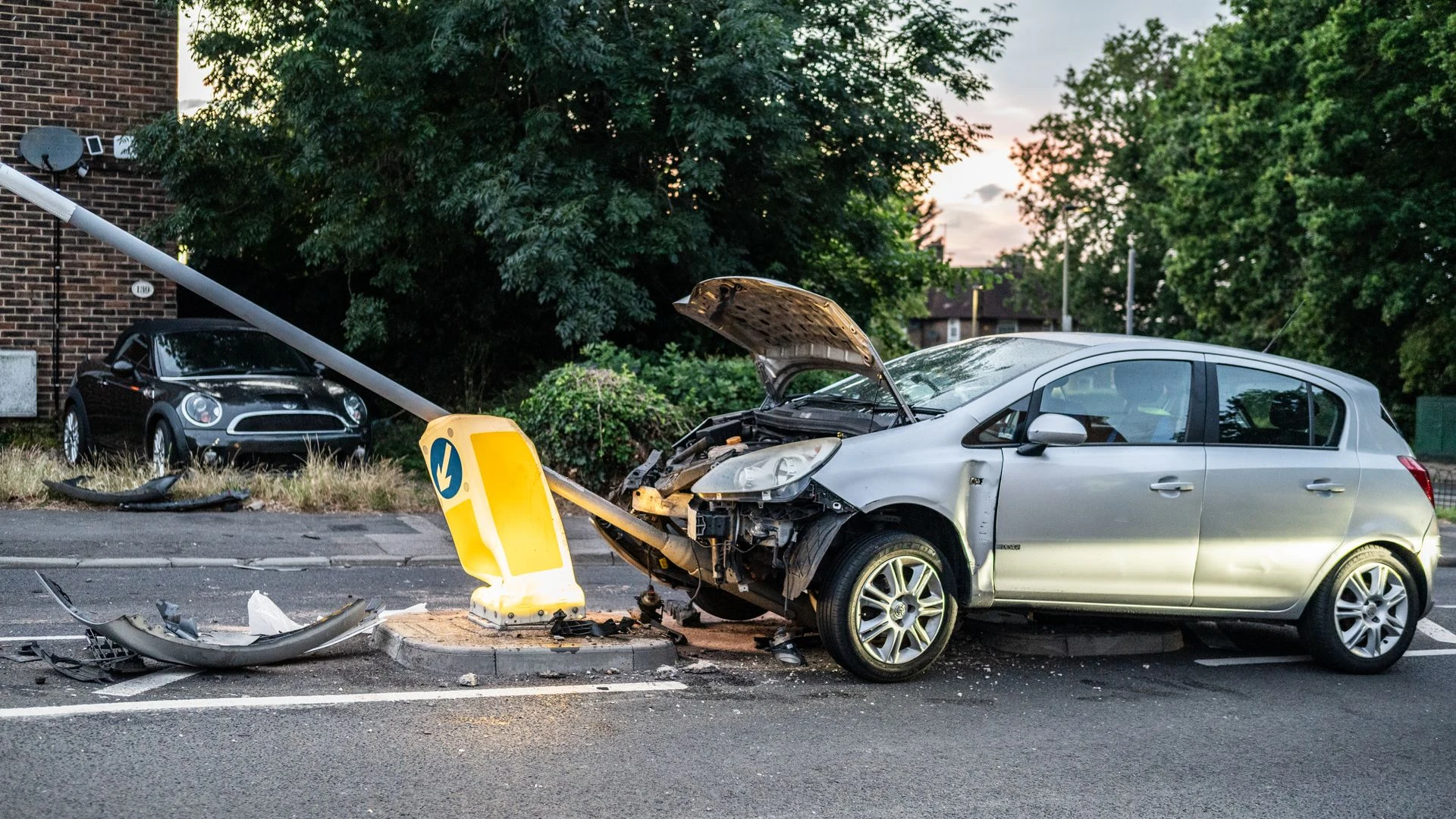
Causing a Traffic Accident in Turkey: Criminal Liability for Injury and Death
A driver who causes injury or death in a road accident in Turkey (Türkiye) faces a criminal investigation in addition to any claim for damages. Causing death by negligence is punished with two to six years' imprisonment, and with two to fifteen years where more than one person dies or a death is accompanied by injuries (Turkish Penal Code No. 5237, Art. 85). Negligent injury carries four months to two years' imprisonment or a judicial fine, increased where the injury is serious (Art. 89). If the driver foresaw the risk and went ahead — drink-driving, running a red light, extreme speed — the negligence is "conscious" and the penalty rises by one third to one half (Art. 22(3)). The sentence is fixed according to the driver's share of fault, which is established by expert report.
For a foreign driver the hours after an accident decide a great deal: what was done at the scene, what was said in the first statement, whether the victims were helped, and whether the driver is allowed to leave the country. This guide explains the duties at the scene, how fault is assessed, the offences and their penalties, mediation with victims, detention and travel bans, and how the criminal case interacts with insurance and compensation.
- At the scene: stop, secure the place, help the injured, call the police and do not leave without permission (Road Traffic Law No. 2918, Arts. 81–82).
- Negligent injury: prosecuted on the victim's complaint, within six months — except that serious injury caused with conscious negligence is prosecuted without complaint (Art. 89(5)).
- Negligent killing: prosecuted of the State's own motion.
- Fault: apportioned between those involved by traffic experts; the court sets the penalty according to fault (Art. 22(4)).
- Conversion to a fine: possible for negligent offences even for long sentences — but not for conscious negligence (Art. 50(4)).
- Failing to help or report an injured person is a separate offence (Art. 98).
- Licence: the court may order withdrawal for three months to three years on conviction (Art. 53(6)).
- Compensating the victims affects mediation, sentence and the civil case.
Legal status of this guide. It reflects the Turkish Penal Code, the Criminal Procedure Code No. 5271 and the Road Traffic Law as in force. Whether negligence is ordinary or conscious, and how fault is divided, are assessed case by case on expert evidence; sentencing outcomes described are typical patterns, not predictions. Last updated: October 2026.
In this guide
- Duties at the scene
- The first hours: tests, statement, lawyer
- How fault is established
- The offences and penalties
- Ordinary and conscious negligence
- Complaint and mediation
- Detention, travel bans and the vehicle
- Sentencing and alternatives
- Leaving the scene
- Insurance and compensation
- Points for foreign drivers
- Frequently asked questions
Duties at the scene
Those involved in a traffic accident must (Road Traffic Law, Art. 81):
- stop immediately in a way that creates no additional danger, and take the measures needed for traffic safety at the scene;
- not change the scene where there is death, injury or damage, including traces and evidence useful for determining responsibility — unless the accident affects traffic or safety of life and property;
- give their identity, address, driving licence, registration and insurance details to others involved on request;
- report the accident to the authorities and not leave before they arrive or without their permission;
- where property was damaged in the owner's absence, find the owner or inform the police.
In addition, drivers involved in or passing an accident must give first aid, inform the nearest police or health service, and, if asked by the authorities, carry the injured to the nearest health facility (Art. 82). Call 112, the single emergency number.
- Damage only, no injury: the drivers may complete the joint accident report form themselves, photograph the scene and move the vehicles, without police — provided all drivers are licensed, insured, sober and in agreement, and no public property is damaged.
- Any injury, however slight: police must attend. Do not agree to "settle it privately" and leave: injuries that seem trivial at the roadside are reported later.
- Photograph vehicle positions, skid marks, signs, lights and the other vehicle's plate, and note witnesses' names and numbers.
The first hours: tests, statement, lawyer
- Alcohol and drug testing is mandatory for those involved in an accident with injury or death. See our guide to drink-driving in Turkey.
- Accident report. Traffic officers draw a sketch and write a report with a preliminary view on fault. It is evidence, not a verdict; errors in it should be challenged early, in writing.
- Custody. In serious cases the driver is taken into custody on the prosecutor's order; the general time limits apply before release or presentation to a judge.
- Statement. You have the right to remain silent, to a lawyer — appointed free of charge on request — and to an interpreter. In a fatal accident, do not give an account without a lawyer present: the first statement on speed, distance and what you saw is the one the experts and the court will measure everything else against.
- Consular notification can be requested by a foreign national.
- Medical examination of the driver, too: your own injuries are evidence of the mechanics of the collision.
See our guide to rights on arrest in Turkey.
How fault is established
- Expert reports. The prosecutor or court obtains a report from traffic experts — in serious cases the traffic department of the Forensic Medicine Institute or a university panel — on who breached which rule and to what degree.
- Primary and secondary fault. Reports describe each party as primarily at fault (asli kusurlu), secondarily at fault (tali kusurlu) or without fault, by reference to the rules listed in the Road Traffic Law as primary faults — running a red light, entering a prohibited lane or direction, rear-ending, failing to give way, unsafe overtaking, unsafe turning — and others.
- The victim's fault. A pedestrian crossing against the signal, a motorcyclist without lights, a passenger without a seat belt: contributory fault does not remove the driver's criminal liability where the driver was also negligent, but it reduces the penalty and the damages.
- No fault, no crime. If the accident was unavoidable for a careful driver, there is no negligence and no offence.
- Challenging the report. Parties may object and ask for a new report from a different or higher panel, and may submit a privately commissioned technical opinion. Evidence worth securing at once: dashcam and CCTV footage, which is overwritten within days; vehicle data; phone records showing whether a driver was on a call; road maintenance and signage records.
- Others who may share fault: the road authority or municipality for a defective road or missing sign; the vehicle owner or employer who allowed an unfit vehicle or driver on the road; the mechanic.
The offences and penalties
| Result | Provision | Penalty |
|---|---|---|
| Injury | Art. 89(1) | Four months to two years' imprisonment, or a judicial fine |
| Injury with lasting weakening of a sense or organ, bone fracture, lasting speech difficulty, permanent facial scar, danger to life, or premature birth | Art. 89(2) | The above increased by one half |
| Injury causing incurable illness or vegetative state, loss of a sense or organ, loss of speech or fertility, permanent facial disfigurement, or miscarriage | Art. 89(3) | The above doubled |
| Injury to more than one person | Art. 89(4) | Nine months to five years' imprisonment |
| Death of one person | Art. 85(1) | Two to six years' imprisonment |
| Death of more than one person, or death with injury to one or more | Art. 85(2) | Two to fifteen years' imprisonment |
| Dangerous driving without any accident | Art. 179(2) | Four months to two years' imprisonment |
| Driving while unable to drive safely | Art. 179(3) | Six months to two years' imprisonment |
| Failing to help or report an injured person | Art. 98 | Up to one year or a judicial fine; one to three years if the person dies as a result |
- "The penalty for an offence committed by negligence is determined according to the perpetrator's fault" (Art. 22(4)). Where several people were negligent, each is liable for his or her own fault.
- Intent. Where a driver accepts the result — for example, deliberately driving at a person — the charge is not negligence but intentional injury or killing, including with "probable intent", with far heavier penalties.
- Personal circumstances. Where the driver's own close relative was the only victim, the court may reduce or waive the penalty for ordinary negligence (Art. 22(6)).
Ordinary and conscious negligence
- Ordinary negligence: the driver did not foresee the result but should have — a moment's inattention, misjudged distance.
- Conscious negligence: the driver foresaw the result as possible but did not want it and trusted it would not happen. "In this case the penalty for the negligent offence is increased by one third to one half" (Art. 22(3)).
- Typical findings of conscious negligence: driving after drinking; passing a red light at speed; overtaking on a blind bend; racing; driving the wrong way; using a phone at high speed; driving a vehicle known to have defective brakes; driving without ever having held a licence.
- Why the classification matters:
- higher sentence;
- a prison sentence for conscious negligence cannot be converted into a judicial fine under the rule that otherwise allows conversion for negligent offences (Art. 50(4));
- serious injuries are prosecuted without the victim's complaint;
- the personal-circumstances waiver is limited to a reduction.
- The classification is argued from the evidence. Speed just above the limit, or a single lapse, is not automatically "conscious".
Complaint and mediation
- Negligent injury is investigated and prosecuted on complaint; "however, except for injury within the first paragraph, no complaint is required where the offence is committed with conscious negligence" (Art. 89(5)). The complaint must be made within six months of the victim learning of the act and the offender, and can be withdrawn, which ends the case if the accused accepts.
- Criminal mediation (uzlaştırma). Negligent injury is within the scope of victim–offender mediation: before indictment the file is sent to a mediator, who puts the parties in contact. Agreement — usually payment of compensation, sometimes an apology or other performance — ends the criminal case without a conviction once performed. See our guide to criminal mediation in Turkey.
- Negligent killing is not complaint-based; ordinary-negligence cases with a single death are within the mediation system through the deceased's heirs under the current list of offences, which should be checked for the case at hand.
- The insurer's role. Compensation agreed in mediation can be funded by the liability insurer within its limits; involve the insurer before signing, or it may refuse to reimburse.
- What agreement does to the civil claim. A mediated settlement normally closes the victim's compensation claim to the extent agreed; read the wording.
Detention, travel bans and the vehicle
- Pre-trial detention cannot be ordered for offences whose maximum penalty does not exceed two years — which excludes simple negligent injury and the endangerment offences (Criminal Procedure Code, Art. 100(4)).
- It can be ordered for negligent killing and for multiple or aggravated injuries, where there is strong suspicion and a ground such as risk of flight. A foreign driver without ties to Turkey is the textbook flight risk; alcohol, leaving the scene and multiple casualties make detention likely in the first days.
- Judicial control is the usual alternative: a ban on leaving the country, periodic reporting to a police station, bail. A travel ban can last for the duration of the proceedings and is the main practical burden for a tourist. See our guides to pre-trial detention and travel bans.
- Objections to detention and to judicial control can be made at any time; showing a fixed address in Turkey, a guarantor, the insurer's involvement and steps taken to compensate the victims supports release.
- The vehicle may be held for expert examination and released afterwards; a hire company will pursue its own claim.
- The licence is taken provisionally in serious cases.
Sentencing and alternatives
- Within the range, the court considers the degree of fault, the gravity of the result and the manner of the act; discretionary mitigation of up to one sixth is available for conduct after the act — in practice, remorse and compensation.
- Deferral of the announcement of the verdict is available for sentences of two years or less where the conditions, including compensation of the loss, are met; no conviction then arises if the supervision period passes without a new intentional offence. See our guide to deferred verdicts.
- Suspension of a prison sentence of two years or less.
- Conversion to a judicial fine for ordinary negligence even where the sentence is long. See judicial fines.
- Conscious negligence with death commonly results in a custodial sentence that is actually served in part, subject to the conditional release rules. See conditional release.
- Licence withdrawal for three months to three years may be added (Art. 53(6)).
- Appeal within two weeks. See criminal appeals.
- Limitation. Fifteen years for negligent killing; eight years for negligent injury. See limitation periods.
Leaving the scene
- Leaving without stopping, without helping or without reporting breaches the Road Traffic Law and is fined.
- Leaving an injured person without help or without informing the authorities is the separate offence of failure to help or report (Art. 98) — and where the person dies for lack of help, one to three years' imprisonment.
- In sentencing for the accident itself, flight is treated as an aggravating circumstance, as an indication of consciousness of guilt and as a ground for detention.
- Insurers have recourse against a driver who fled.
- If you left in panic, go to the police with a lawyer immediately. Voluntary surrender within hours is very different from being traced by plate recognition a week later.
Insurance and compensation
- Separate tracks. The criminal court does not award damages. The injured, or the dependants of the deceased, claim against the driver, the vehicle's operator and the compulsory liability insurer, through the insurer's claims process, the Insurance Arbitration Commission or the courts.
- The criminal judgment's effect. The civil court is not bound by an acquittal for lack of fault but is bound by the facts established in a conviction; fault percentages are reassessed.
- Compulsory insurance limits may not cover serious injury or death in full; the driver and operator are liable for the excess personally.
- Recourse. The insurer reclaims from the driver where the accident was caused by alcohol or drugs, by a driver without the required licence, or after flight from the scene.
- Uninsured or unidentified vehicles: the Guarantee Account pays bodily injury claims.
- Paying early — through the insurer or personally — is the single most effective step in the criminal case as well.
See our guide to traffic accident compensation in Turkey.
Points for foreign drivers
- Licence and insurance. Check before driving that your licence is valid for Turkey and that the vehicle has compulsory insurance — a green card extended to the whole of Turkey for a foreign-plated car. Driving without a valid licence turns an accident into a far more serious case. See our guide to driving in Turkey.
- Hire cars. Notify the rental company at once; obtain the police report it requires. Your liability under the rental contract is additional.
- Do not leave Turkey without confirming that there is no travel ban and that the prosecutor does not need you; if you have left, appoint a lawyer and respond to summonses. A warrant issued in your absence is executed at your next entry.
- Trial in absence. A defendant who has been questioned can be tried in absence in defined cases, and can ask to be heard from abroad through judicial assistance or video link.
- Language. Sign nothing you have not understood through an interpreter.
- Immigration. A conviction for a negligent offence does not usually lead to deportation, but it appears in permit and citizenship assessments. See deportation after conviction.
- Victims who are foreign have the right to join the case, to an interpreter and to claim compensation; see the compensation guide above.
Involved in an accident with injuries in Turkey? Send the accident report, the date and place, and whether a travel ban was imposed. Message Yayla Law on WhatsApp or use the contact form. We act from the first statement: evidence, expert reports, mediation with the victims and the insurer, and lifting travel restrictions.
Frequently asked questions
Is causing a traffic accident a crime in Turkey?
If someone is injured or killed and the driver was negligent, yes: negligent injury or negligent killing.
What is the sentence for causing a fatal accident?
Two to six years for one death; two to fifteen years for more than one death or death with injuries; increased by a third to a half for conscious negligence.
Will I be detained?
Detention is excluded for offences punishable by up to two years. For fatal accidents it is possible, especially with alcohol, flight or no ties to Turkey; a travel ban is the common alternative.
Can the case be settled with the victim?
Negligent injury is complaint-based in most forms and subject to mediation; an agreement that is performed ends the case.
What is conscious negligence?
Foreseeing the risk and going ahead — for example drink-driving or running a red light. It raises the penalty and prevents conversion of the sentence to a fine.
The pedestrian was also at fault. Does that help?
It reduces the penalty and the damages, and if the driver had no fault at all there is no offence.
What if I left the scene?
You face additional fines and possibly the offence of failing to help. Report to the police with a lawyer at once.
Can I leave Turkey while the case is pending?
Only if no travel ban has been imposed. Appoint a lawyer and stay reachable.
Does paying compensation end the criminal case?
In mediation cases, yes once performed. Otherwise it reduces the sentence and opens the way to deferral or suspension.
Legal basis and sources
- Turkish Penal Code No. 5237, Articles 21, 22, 50, 53, 62, 85, 89, 98 and 179 — official consolidated text at mevzuat.gov.tr.
- Criminal Procedure Code No. 5271, Articles 100, 109, 231 and 253 — mevzuat.gov.tr.
- Road Traffic Law No. 2918, Articles 48, 81, 82, 84, 85 and 91.
This article provides general legal information on Turkish law as of October 2026. It is not legal advice. Outcomes depend on the expert assessment of fault in each case.